


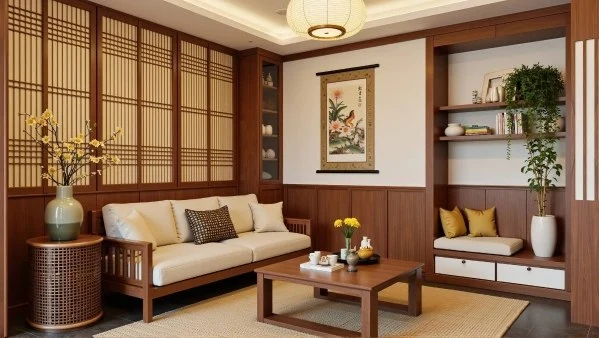

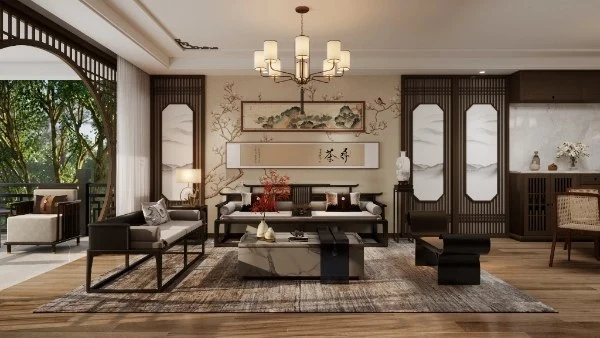
This living room embodies an Eastern Zen aesthetic, grounded in warm natural wood and linen‑cotton textiles. Grille‑paneled walls, traditional Chinese scroll paintings, and tasteful ornaments create a soft, tranquil palette. Simple solid‑wood furniture, built‑in storage, and warm lighting are complemented by floral arrangements and greenery. The overall design is restrained and minimal, cultivating a relaxed, comfortable atmosphere that feels closely connected to nature.
The Romantic Lens: How the West Imagines the East in Chinoiserie Decor
May 19, 2026 • 13min read
There is a particular kind of magic when a room holds a story, a feeling that the walls have travelled and every porcelain vase on the mantel was collected slowly and with wonder. This is the gift of chinoiserie, the West's romantic dream of the East woven from ceramics, bamboo fretwork and architectural silhouettes by European artisans who fell in love with the idea of the Silk Road.
Today that dream has softened into something wonderfully liveable, and we can walk through its most captivating elements to bring them home one storied piece at a time.
Ⅰ.Styling Ceramic Collections Beyond the Vase
The Royal Blueprint – How Porcelain Rooms Became a Status Symbol
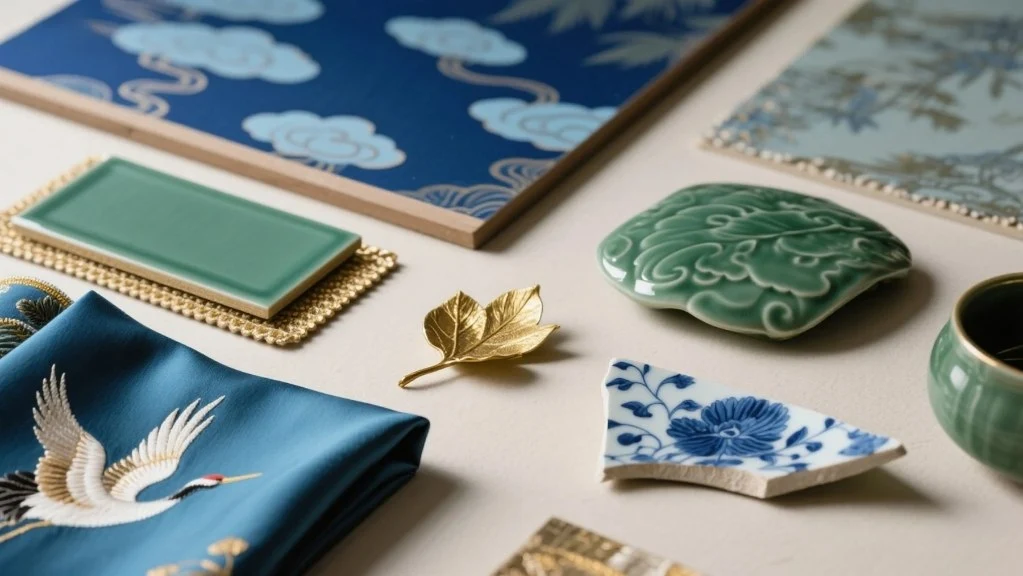
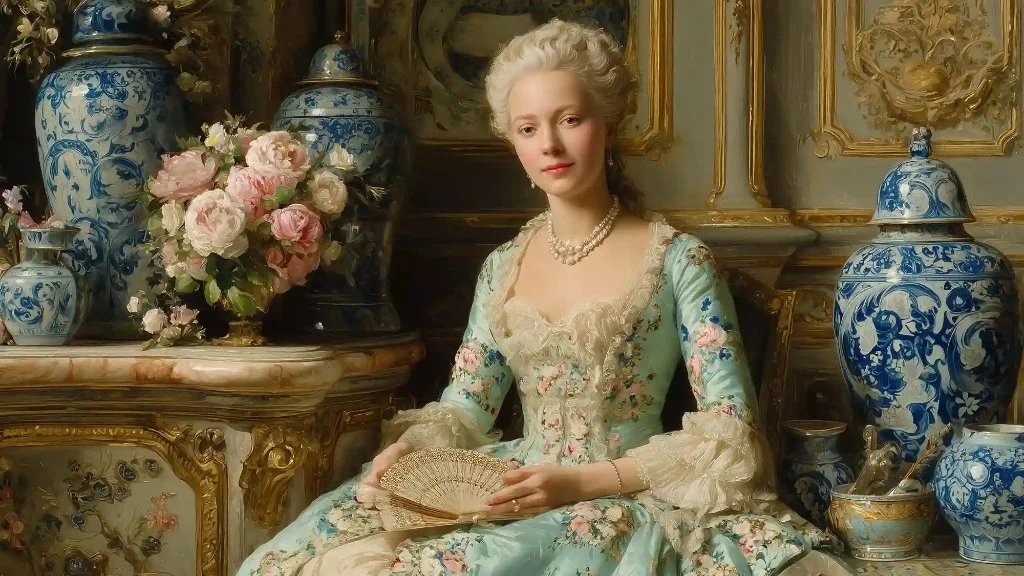
In the 17th and 18th centuries, European royalty caught a fever for Chinese porcelain, building entire rooms to display Kraak ware, vases and ginger jars. Louis XIV’s Trianon de Porcelaine started a trend for ceramic-studded interiors, and the porcelain room became the ultimate status symbol, whispering of exotic lands and sophistication.
Mass and Mix – The Art of Grouping Ginger Jars
Today you need only a console table and the courage to cluster. Collect ginger jars and baluster vases of varying heights and arrange them like a floral composition. The beauty lies in the mass, the way patterns repeat and riff against each other, making a plain entryway feel curated over a lifetime.
Beyond the Vase – Ceramics as Wall Art and Lighting
Once you have mastered the cluster, let porcelain migrate beyond the tabletop. Hang an oversized art print of a classic motif, or turn a lidded jar into a lamp for a warm, atmospheric glow. Small plates can also be hung salon-style, letting the romance of these decorative objects become part of the room’s architecture.
Ⅱ. Faux Bamboo & Chippendale Chairs
The Illusion of Bamboo – Why the West Turned to Faux Finishes
Genuine bamboo was perishable, so Western craftsmen invented faux bamboo furniture carved from wood, cast in brass or wrought in metal. Ballard’s Bonair series captures the rhythm of bamboo joints, bringing a breezy lightness to even the most urban apartment. The sculptural texture plays beautifully against smoother finishes.
The Macau Moment – Chippendale's Chinese Chairs as Instant Icons
The Chippendale Chinese chair, with its open backrest and delicate fretwork, is an 18th-century European interpretation of Asian designs. Ballard’s Macau chair is a direct heir, and a single one pulled up beside a modern sofa instantly adds the spice of a well-travelled collector. It drops an elegant collision of eras into the room.
The Mirror Trick – Reflecting Light and Fantasy
A faux bamboo mirror expands space and creates an instant focal point. Hang one above a polished console and slide a cane-seated chair beneath it. In that tiny vignette you have composed a complete chinoiserie story of earthiness, glamour and depth.
Ⅲ.Architectural Motifs Become Whimsical Pattern
The Towering Form – From Garden Folly to Furniture Crown
In 18th-century gardens, the oriental tower was a romantic folly. Chinoiserie interiors borrowed its silhouette for cabinet tops, lanterns and headboards. A towering étagère adds sculptural drama, and even bedside lamps with upswept shades telegraph an East-meets-West aesthetic.
Toile Transformed – When French Pastoral Meets Chinese Palaces
Traditional toile de Jouy fabric was given an exotic makeover in the 18th century, swapping shepherds for mandarins and barns for fanciful towers. Use chinoiserie toile on a single armchair, frame panels of it, or paper a powder room wall. It is pattern as storytelling, instantly layering a room with history.
Mixing Pattern Without Chaos
A room full of chinoiserie toile and ceramics can tip into visual noise. Balance the fantasy with large expanses of solid, quiet surfaces and natural materials like seagrass and jute. The interplay between ornate and restrained keeps the room vivid but breathable.
Ⅳ.Garden Stools & Frog Knots
The Garden Stool’s Secret Life – The Most Versatile Piece in Chinoiserie
The glazed ceramic garden stool has been adopted by Western decorators as a chameleon. Use it beside a bathtub, as a planter, or as an impromptu table. Its round, glossy form adds sculpture without demanding attention.
The Frog Knot Detail – Subtle Trim with Serious Heritage
Frog knots, traditional Chinese fastenings, now adorn decorative cushions and curtain tiebacks. A frog-knot pillow brings a whispered layer of textile heritage to a sofa. Use one or two on a neutral linen sofa where their intricate knotting can sing.
Curating a Conversation-Worthy Surface
Top a glossy garden stool with a small polished tray holding a tiny lamp and a single orchid stem. Stack well-loved books beside it. This small sculptural vignette lets you try the chinoiserie mood without committing to a whole room.
Ⅴ.Layers of Deep Finish & Gold
Coromandel Screens and the Lustre of Polished Surfaces
The deep, glossy finish offers a surface that appears to have depth you could fall into. A coromandel screen leaning against a wall becomes an instant floor-to-ceiling mural. Even a modestly sized dark cabinet with soft gold decoration brings that same liquid lustre.
The Dark Room, Illuminated – Styling with Rich, Deep Tones
Pair dark polished walls or furniture with materials that bounce light back, like brass, mirrors and white upholstery. A red chest against a pale wall adds boldness, and dark chairs around a light wood table feel moody but never somber. Tablelamps scatter warm light, making the room velvety and jewel-like.
Gold's Supporting Role – Trims, Leafing and Hardware
Gold quietly pulls the chinoiserie palette together. Look for gilded fretwork on mirrors, brass bamboo pulls, and hand-applied gold leaf on lampshades. Use it sparingly to whisper “treasured” without shouting.
Ⅵ.The New Chinoiserie Mix
The "Less Is More, Make It Bold" Rule
You do not need a room full of chinoiserie; one bold moment carries the entire story. A towering étagère against a white wall or a pair of garden stools flanking a modern fireplace is enough. Choose one or two pieces you love and let them be the heroes of the space.
Avoiding the Costume-Party Room
Avoid cramming every signifier into one space. Mix your Chippendale chair with a mid-century sofa, or prop a dark cabinet against textured plaster. The contrast gives each piece the dignity of an artifact and lets the room breathe.
6 Popular Chinoiserie Design Ideas
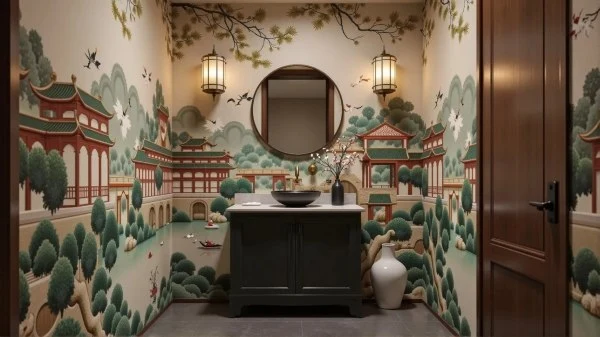
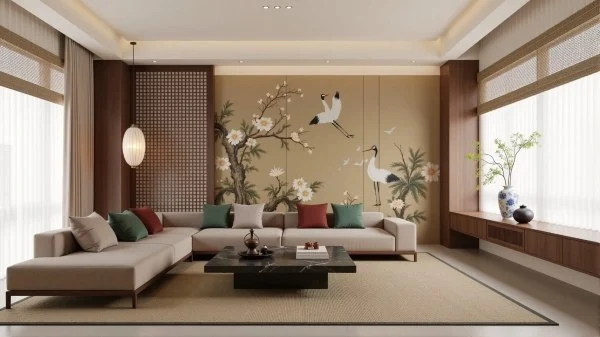
5. Poetic Dwelling of New Chinese-Style Living Room
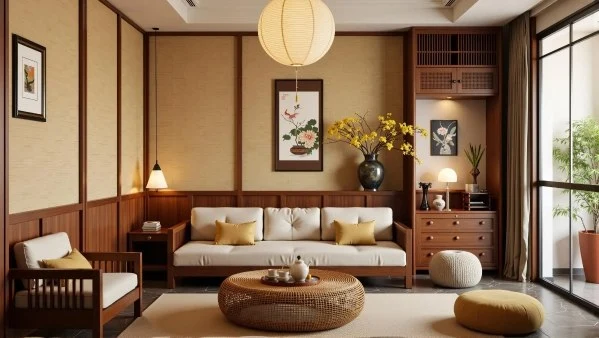
6. New Chinese-Style Elegant Residence
Conclusion
Chinoiserie never really goes out of style. It is about borrowing a few pieces of that romance and making them your own. All it takes is one ceramic vase, one bamboo chair, one lamp with an upswept shade, and suddenly your room has a story to tell.
Share



_1779173346357.png)


