Let's cut to the chase: Can you actually pay your rent—and maybe even your student loans—by designing dreamy living rooms? Or is interior design just a "passion project" with a side of ramen noodles? Spoiler: it's not all mood boards and Pinterest pins. The truth about interior designer salaries is messier, more nuanced, and frankly, way more interesting than most glossy Instagram reels let on.
_1771984981425.png) INTERIOR DESIGNER REVIEWING MOOD BOARD WITH CLIENT IN MODERN STUDIO
INTERIOR DESIGNER REVIEWING MOOD BOARD WITH CLIENT IN MODERN STUDIO
If you're eyeing this career—or already in it and wondering if you're being underpaid—you're not alone. And no, you don't have to "fake it till you make it" forever. In this deep dive, we'll unpack real salary data, spotlight who's really cashing in (hint: it's not always the TikTok-famous residential stylists), and zoom in on one often-overlooked market: Georgia. Buckle up—it's time to separate the fluff from the floor plans.
What's the Real Average Salary for Interior Designers in the U.S.?
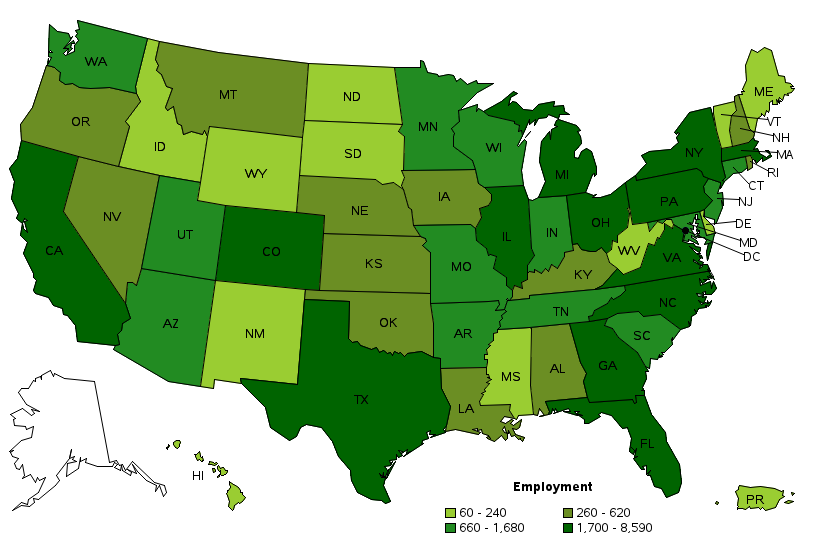 EMPLOYMENT OF INTERIOR DESIGNERS,BY STATE,MAY 2023
Per the U.S. Bureau of Labor Statistics (BLS) 2024 data, the median annual wage for interior designers nationwide is $63,490. But hold your horses—that number tells only half the story.
STATES WITH THE HIGHEST EMPLOYMENT LEVEL IN INTERIOR DESIGNERS
| State | Employment | Employment per thousand jobs | Location quotient | Hourly mean wage | Annual mean wage |
| California | 8,590 | 0.48 | 1.07 | $ 39.22 | $ 81,570 |
| New York | 6,900 | 0.73 | 1.65 | $ 36.21 | $ 75,310 |
| Florida | 6,600 | 0.69 | 1.55 | $ 31.19 | $ 64,880 |
| Texas | 4,850 | 0.36 | 0.80 | $ 32.52 | $ 67,650 |
| Colorado | 2,480 | 0.87 | 1.96 | $ 33.38 | $ 69,430 |
Why? Because "interior designer" is a broad umbrella. It covers everyone from freelance bedroom renovators working out of their mom's basement to lead designers at Gensler shaping billion-dollar corporate campuses. The 10th percentile earns around $37,000, while the top 10% pull in over $102,000. That's a massive spread.
| Percentile | 10% | 25% | 50% (Median) |
75% | 90% |
|---|---|---|---|---|---|
| Hourly Wage | $ 18.14 | $ 23.07 | $ 30.05 | $ 38.26 | $ 48.97 |
| Annual Wage | $ 37,730 | $ 47,990 | $ 63,490 | $ 79,580 | $ 101,860 |
And here's the kicker: location, experience, and specialization swing that pendulum wildly. A junior designer in rural Kansas might start at $42K, while a mid-level pro in New York City could command $85K+—before bonuses or product commissions.
So yeah, the national average is a useful benchmark, but it's like saying "the average American eats 3 slices of pizza a week." Sure, but are we talking frozen DiGiorno or Neapolitan wood-fired? Context matters.
Who's Raking It In? The Highest-Paid Interior Design Specialties
Let's get real: not all design gigs are created equal. If you're dreaming of six figures, you'd better know where the money flows.
_1771985181532.png) |
_1771985202165.png) |
| COMPARISON OF HIGH-PAYING INTERIOR DESIGN SPECIALTIES: COMMERCIAL VS RESIDENTIAL | |
1. Commercial & Corporate Interiors
Forget shag rugs—this is where the big contracts live. Designing offices, co-working spaces, or tech HQs for Fortune 500 companies? You're playing in the big leagues. Salaries here often start at $70K–$90K and can soar past $130K for senior roles, especially with firms like HOK, Perkins&Will, or Jacobs.
_1771985428381.png) LEAD INTERIOR DESIGNER PRESENTING CORPORATE OFFICE LAYOUT TO TEAM
LEAD INTERIOR DESIGNER PRESENTING CORPORATE OFFICE LAYOUT TO TEAM
According to the American Society of Interior Designers (ASID), commercial designers consistently report higher compensation due to project scale, regulatory complexity, and client budgets.
2. Hospitality & Luxury Resorts
Hotels, casinos, high-end spas—these projects demand storytelling, brand alignment, and serious technical chops. Designers in this niche frequently earn $80K–$110K, with bonuses tied to project completion or client satisfaction.
3. Healthcare & Senior Living Environments
Surprised? Don't be. With aging populations and post-pandemic facility upgrades, healthcare design is booming. These roles require knowledge of ADA compliance, infection control, and human-centered design—but they pay well: $75K–$100K+ is common.
4. High-End Residential (But Only If You're Elite)
Yes, some residential designers hit six figures—but usually only after building a cult following, launching product lines, or operating as full-service boutique firms. The average solo residential designer? More like $50K–$70K, unless they're in Beverly Hills or Manhattan.
Bottom line: if you want to get paid, go commercial. Residential may look glamorous, but the real breadwinners are behind the scenes in boardrooms, hospitals, and airports.
Georgia on My Mind: What Do Interior Designers Earn in the Peach State?
Now, let's talk Georgia—a state quietly becoming a design hotspot. Thanks to Atlanta's booming tech scene, film industry ("Y'allywood"), and affordable cost of living, demand for skilled designers is rising.
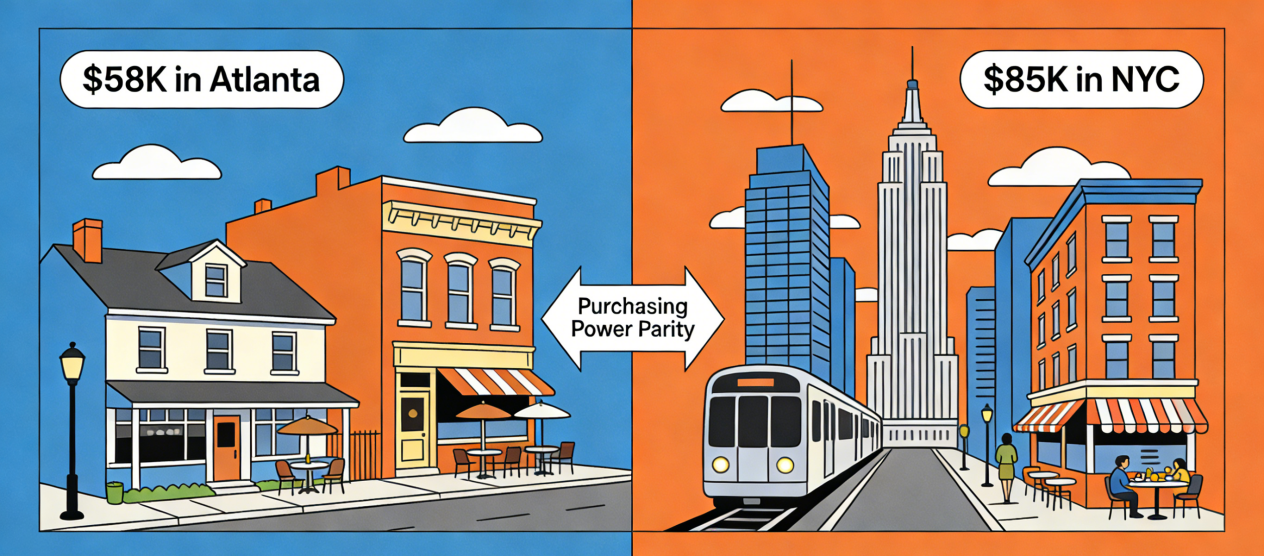 COMPARISON OF SALARIES AMONG INTERIOR DESIGNERS
Per BLS and verified job platforms like salary.com, the average interior designer salary in Georgia hovers around $58,200. That's slightly below the national median—but here's what nobody tells you: $58K in Atlanta gives you roughly the same purchasing power as $85K in NYC, thanks to housing costs that won't make you cry.
_1771985531707.png) ATLANTA SKYLINE WITH OVERLAY
ATLANTA SKYLINE WITH OVERLAY
In Atlanta, experienced designers at firms like tvsdesign or Rule Joy Trammell + Rubio report salaries between $65K and $85K. Entry-level? Around $45K–$52K. Outside metro areas (think Savannah or Athens), pay dips to $48K–$55K, but so do rents—making net disposable income surprisingly competitive.
One insider tip: Georgia doesn't require state licensing for interior designers (unlike Florida or Texas), but certification still matters. Holding an NCIDQ credential can boost your salary by 10–15% and open doors to commercial projects.
So, is Georgia a smart move? If you're strategic, absolutely. It's not NYC, but it's also not drowning in $3,500/month studio apartments.
Can Interior Designers Actually Make Good Money?
Let's address the elephant in the room: "Can you make good money?"
The honest answer? Yes—but not by accident.
Making "good money" in interior design isn't about having a great eye for throw pillows. It's about business acumen, niche mastery, and relentless networking.
Consider this:
- A designer charging $125/hourfor 30 billable hours/week = $187,500/year (before taxes).
- A firm owner marking up furniture by 30–40% on a $200K project = $60K–$80K in gross profitfrom one client.
But—and this is a big but—most designers undercharge. They fear losing clients, undervalue their expertise, or stick to hourly rates when flat fees or value-based pricing would serve them better.
The top earners? They've productized their services, built referral engines, and often diversified into teaching, digital products, or licensed collections.
_1771985633530.png) FREELANCE INTERIOR DESIGNER TRACKING BILLABLE HOURS
FREELANCE INTERIOR DESIGNER TRACKING BILLABLE HOURS
So yes, you can make good money. But you've got to treat design like a business—not just an art form.
Pro tip: Start tracking your billable hours this week—even if you're freelance. You'll be shocked how much unpaid "admin" eats into your real hourly rate.
The Hidden Pay Boosters: Certifications, Portfolios, and Client Types
Want to jump from $60K to $90K? It's not just about years on the job. Three levers matter most:
- NCIDQ Certification: Non-negotiable for commercial work. Firms pay premiums for credentialed designers.
- Portfolio Depth: Not just pretty photos—show process, problem-solving, and measurable outcomes (e.g., "increased patient satisfaction scores by 22% through spatial redesign").
- Client Tier: Working with developers, institutions, or brands pays more than one-off homeowners. Recurring B2B relationships = stable income.
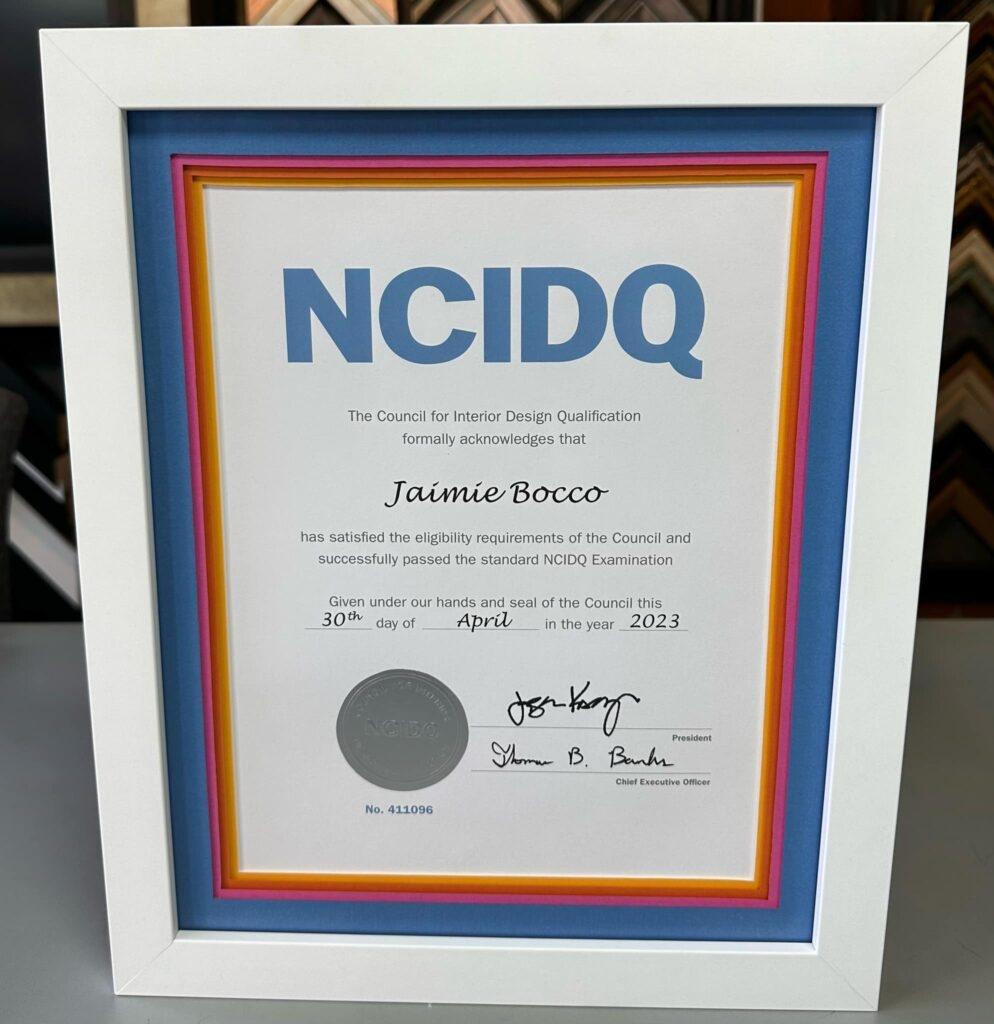 INTERIOR DESIGN SALARY ABOUT NCIDQ
Also, don't sleep on software fluency. Mastery of Revit, Enscape, or AutoCAD isn't just technical—it signals you can handle complex, high-budget projects.
Remember: design isn't just about picking paint—it's about solving expensive human problems. The better you articulate that value, the more you get paid.
Is Interior Design a Hard Major? (And Does It Pay Off?)
Quick sidebar: many ask, "Is interior design a hard major?"
Academically? It's rigorous. You'll juggle color theory, building codes, material science, CAD, sustainability standards, and client psychology—all while pulling all-nighters for studio critiques. It's equal parts art school and engineering.
But does it pay off? Long-term, yes—if you specialize wisely.
_1771985721695.png) INTERIOR DESIGN STUDENT WORKING LATE IN STUDIO
INTERIOR DESIGN STUDENT WORKING LATE IN STUDIO
A generalist degree might land you at $45K. But pair that degree with a minor in business, an internship at a healthcare design firm, and NCIDQ prep, and you're looking at $75K+ within five years.
The ROI isn't instant, but it's real.
Final Takeaway: Your Income Is What You Design It To Be
Here's the tea: interior design isn't a get-rich-quick scheme. But it's also not a dead-end gig.
Your earning potential hinges on where you work, who you serve, and how you position yourself. Go generic, stay local, and charge by the hour? You'll scrape by. Go niche, think like a CEO, and solve expensive problems for high-value clients? You'll thrive.
And if you're eyeing Georgia? Smart move. The market's ripe, the cost of living's kind, and the design community's growing. Just don't expect to coast on aesthetics alone.
In this field, your portfolio is your resume, your network is your net worth, and your specialty is your salary multiplier.
_1771985798074.png) DIVERSE GROUP OF INTERIOR DESIGNERS COLLABORATING
DIVERSE GROUP OF INTERIOR DESIGNERS COLLABORATING
So—ready to design not just spaces, but your future income?
Because in interior design, the only limit to what you make… is what you're willing to build.



_1771984500921.png)