In today's fast-paced life, minimalism, with its "less is more" philosophy, is becoming increasingly popular in home design, especially in the kitchen, a frequently used space. A simple design maximizes space utilization and provides a comfortable cooking experience.
A minimalist kitchen is not simply empty space; it achieves a balance of function and aesthetics through thoughtful layout, high-quality materials, and meticulous attention to detail. This article compiles 11 minimalist kitchen design ideas, covering different apartment types and budgets, while also answering common design questions for beginners, helping you easily create a minimalist kitchen that is both sophisticated and practical.
01 Basic Layouts
1. Linear Layout: Ideal for Small Apartments
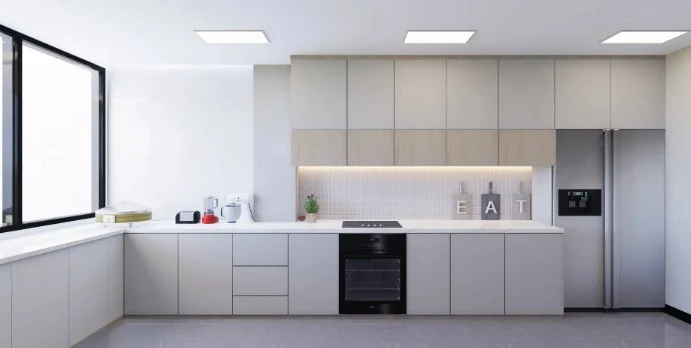
This kitchen uses a linear layout, with all cabinets and appliances neatly arranged along one wall, without any unnecessary protrusions. This visually stretches the depth of the space, making it suitable for long and narrow kitchens. The linear layout, combined with concealed handles, reduces clutter and leaves ample countertop space, balancing simplicity and practicality.
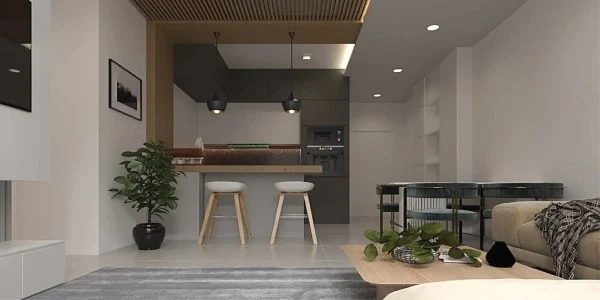

2. U-Shaped Layout: Balancing Storage and Workflow
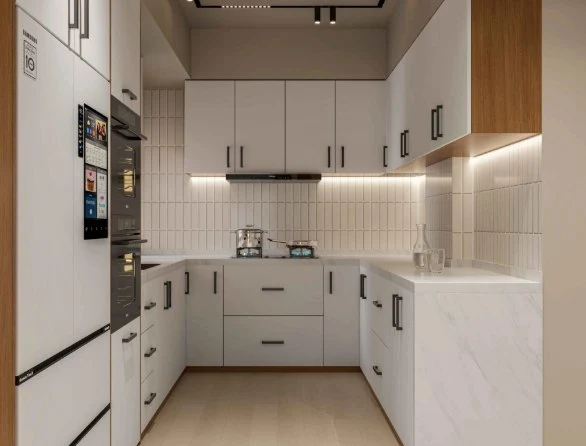
This small apartment kitchen uses a U-shaped layout, utilizing three walls to create cabinets, forming a golden workflow of "wash-chop-cook," maximizing storage space while avoiding visual clutter. The cabinets feature a monochromatic design, and the U-shaped layout makes the kitchen lines smoother.
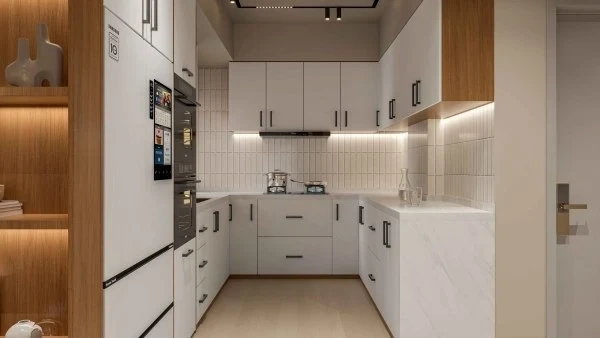
3. Open Layout: Breaking Down Spatial Barriers
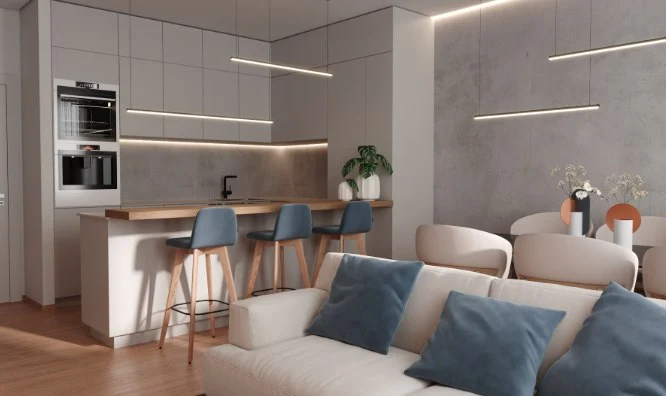
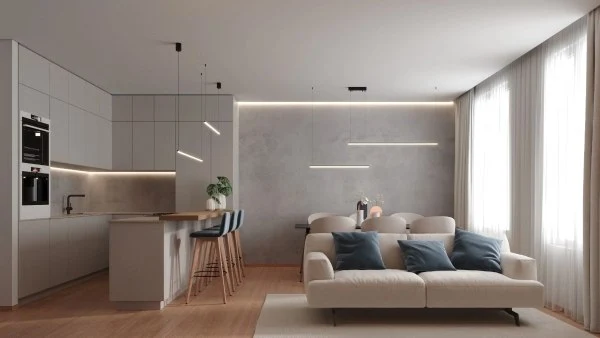
The kitchen and dining/living room are connected in an open layout, making the space more open and airy. An island or bar counter serves as a divider, retaining cooking functionality while also functioning as a dining and preparation area. Linear lighting strips provide even illumination. Open layouts are suitable for large apartments and families who value a sense of openness.
02 Color Scheme
4. High-Saturation Colors
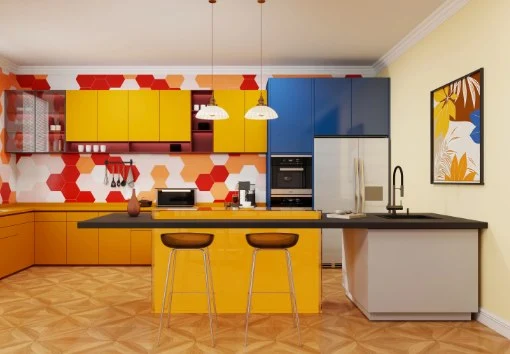
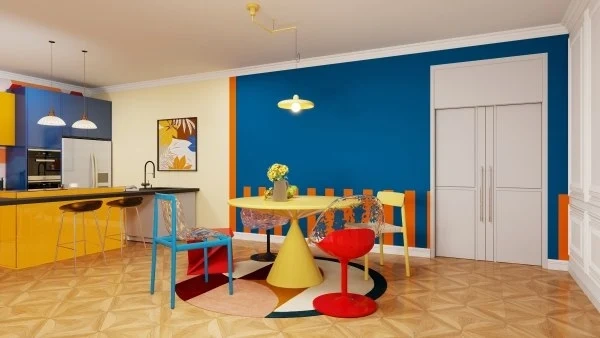
This kitchen uses a striking color scheme of high-saturation bright yellow, royal blue, and warm orange as its core visual element. Geometric patchwork and vibrant colors create a strong visual tension, full of youthful and avant-garde artistic flair. The kitchen cabinets feature a color-blocked design with distinct zones. The bright yellow work area contrasts with the royal blue tall cabinets, creating a warm-cool effect. The black island countertop balances the vibrant colors, achieving both aesthetics and practicality. The overall kitchen, with its highly saturated colors, conveys a lively and dynamic modern atmosphere.
5. Classic Black and White Color Scheme
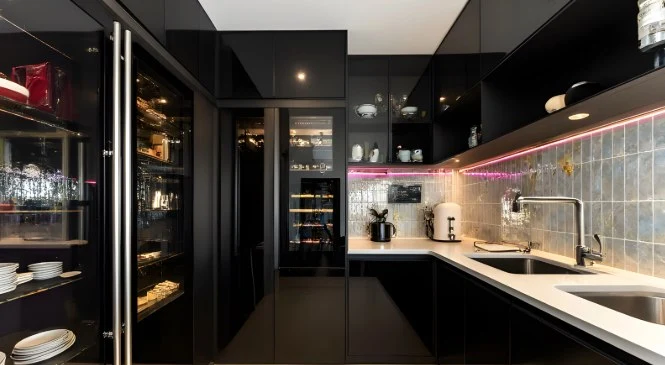
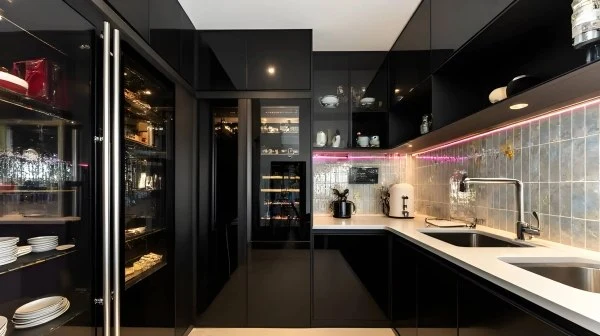
This kitchen features a combination of matte and glossy black tall cabinets as its main element, paired with a sleek white quartz countertop. The black and white contrast establishes a sophisticated tone. The black glass cabinet doors on the left, with their metal frames, concealed lighting strips, and pink neon light strips, inject a cyberpunk-inspired trendiness. The entire kitchen design, with its classic black and white color scheme, creates a trendy and personalized space.
6. Morandi Low-Saturation Color Scheme
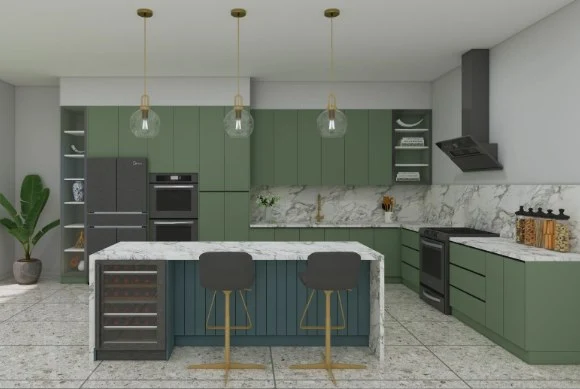
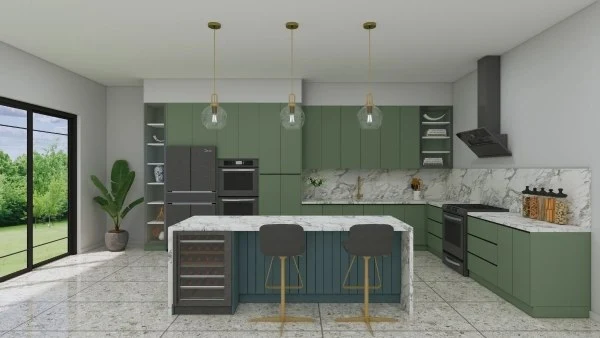
This kitchen's color scheme is predominantly green, accented with blue, using a Morandi color palette. The matching cabinets and countertops create a softer visual effect, suitable for families who prefer a gentle style. Adding black and metallic accents gives the kitchen a minimalist yet sophisticated feel.
7. Monochromatic Layout
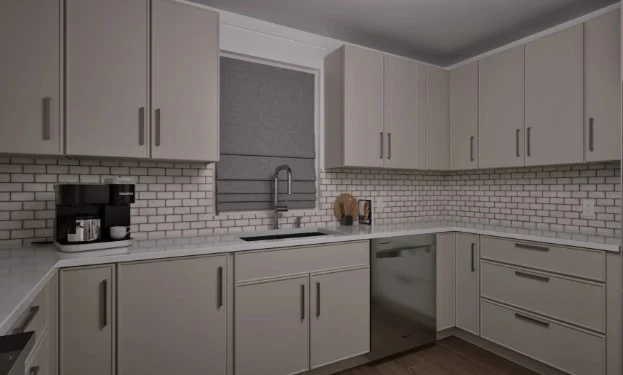
This kitchen features low-saturation matte cabinets paired with simple, long metal handles. The walls are covered in classic white square tiles, echoing the pure white quartz countertop and enhancing the space's cleanliness and openness. The cabinets, countertops, and walls all use a monochromatic layout, without any obvious color transitions. The entire kitchen design, with its unified low-saturation color palette and classic material combinations, creates a kitchen space that combines practicality and sophistication.
03 Material Selection
8. Marble Countertop
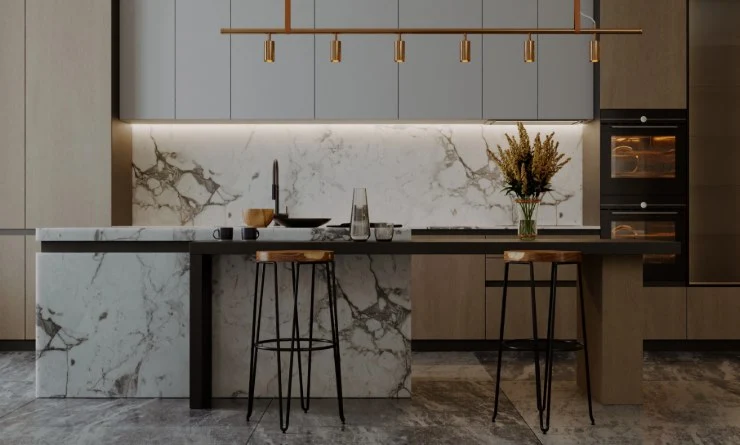
This kitchen uses sophisticated gray, light wood tones, and marble textures as its core elements. The overall design features a balance of warm and cool tones achieved through handle-less light gray wall cabinets and light wood base cabinets. The marble island and backsplash, with their natural ink-wash textures, become the most striking decorative element in the space. The integrated marble island design accommodates both work and social functions, creating a stylish and practical kitchen and dining area.
9. Raw Wood Material
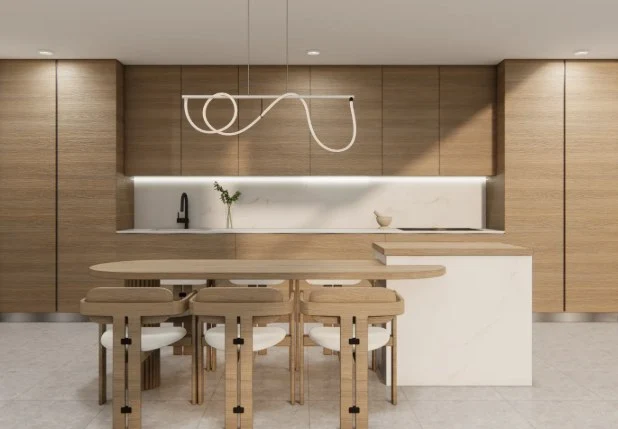
This kitchen and dining area uses raw wood as its core material, running throughout the cabinetry, dining table, and chairs. The delicate wood grain and clean, handle-less cabinet doors contrast with the white marble-textured countertop and background wall, creating a material contrast. The central oval-shaped wooden dining table features smooth lines and a strong sense of design, while the white curved pendant light hanging above becomes the visual focal point, conveying a minimalist yet warm aesthetic.
04 Detail Design
10. Floor-to-Ceiling Cabinets
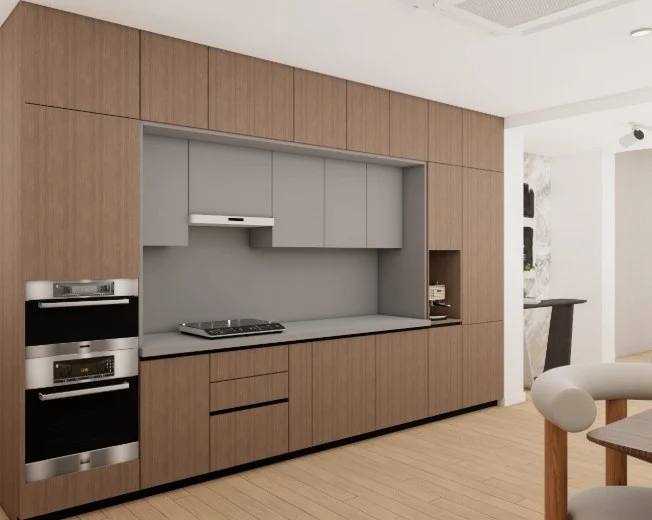 The kitchen cabinets extend from the floor to the ceiling, making full use of vertical space and preventing dust accumulation on top. Appliances such as the refrigerator, oven, and dishwasher are integrated into the cabinetry, flush with the walls, with no exposed lines, making the kitchen look cleaner and saving countertop space.
11. Metalwork
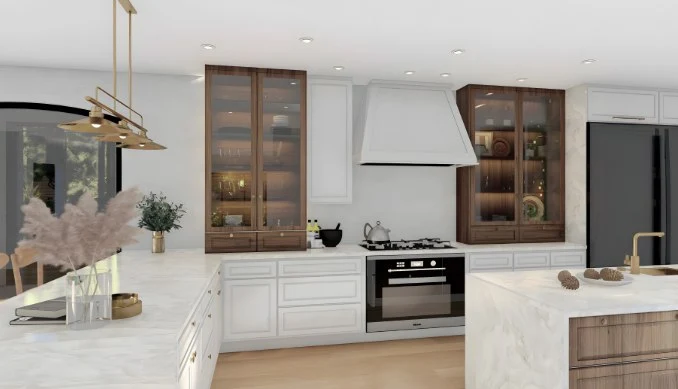
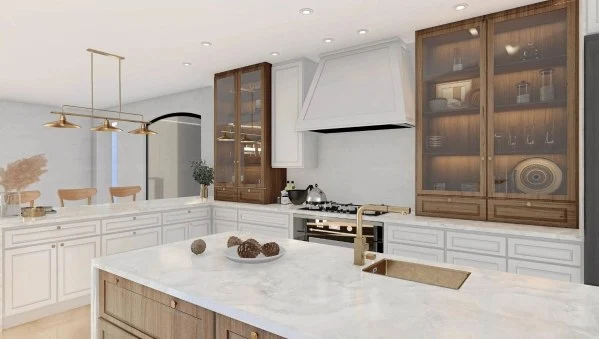
This kitchen utilizes numerous metalwork elements. Brass pendant lights, faucets, and cabinet handles create a unified metallic accent, injecting understated luxury into the space. The transparent design of the dark walnut wood glass cabinet transforms tableware and glassware into decorative displays, adding a modern touch. The entire kitchen design integrates metalwork and transparent design, creating a high-quality dining and kitchen space.
Summary
The core of minimalist kitchen design is to create a space that combines practicality and aesthetics using clean lines, unified colors, and textured materials. The 11 ideas above are adaptable to both small and large apartments, and can be used on both low and high budgets. They unlock a simple yet sophisticated kitchen experience without complex renovations. We hope the design ideas on the EClife platform can provide inspiration for creating your ideal minimalist kitchen, making cooking a therapeutic enjoyment.
Frequently Asked Questions
1. Is a minimalist kitchen suitable for small apartments?
Absolutely. The core of a minimalist kitchen is "simplicity and openness." Through designs such as a linear layout, floating cabinets, and consistent color schemes, it effectively stretches the visual space, reduces clutter, and maximizes storage space, solving the pain points of "crowdedness and messiness" in small kitchens.
2. Minimalist kitchens can easily feel cold. How can this be improved?
This can be improved in three ways: ① Add soft tones such as light wood or creamy coffee colors to balance the coldness; ② Place a few green plants and cotton/linen tablecloths to increase warmth; ③ Use warm lighting to soften the coldness and make the kitchen more inviting.
3. Is storage sufficient in a minimalist kitchen?
Yes, it is. A minimalist kitchen doesn't mean "less storage," but rather "hidden storage"—through floor-to-ceiling cabinets, built-in appliances, and drawer partitions, it makes full use of every inch of space, hiding clutter inside the cabinets while maintaining a clean countertop and meeting daily storage needs.