Home renovation decisions often come down to one big question:
Is the look you want worth the time,money,and hassle to get it right?
When it comes to tile layouts,homeowners usually end up choosing between a stack bond tile pattern and more traditional tile stacking patterns like brick bond or staggered layouts. Both can look great. Both can fail badly if installed poorly. But the real difference shows up in cost,difficulty,and long-term performance.
 |
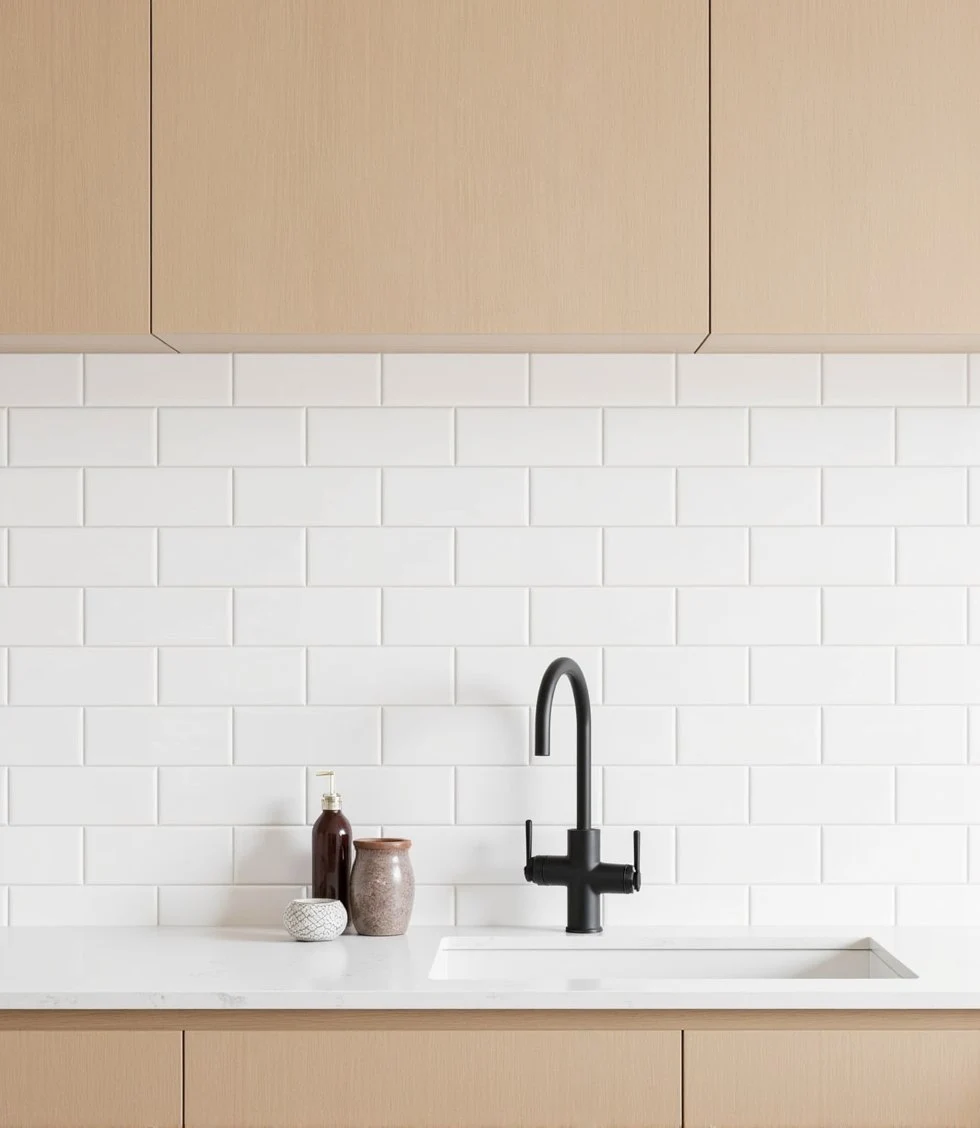 |
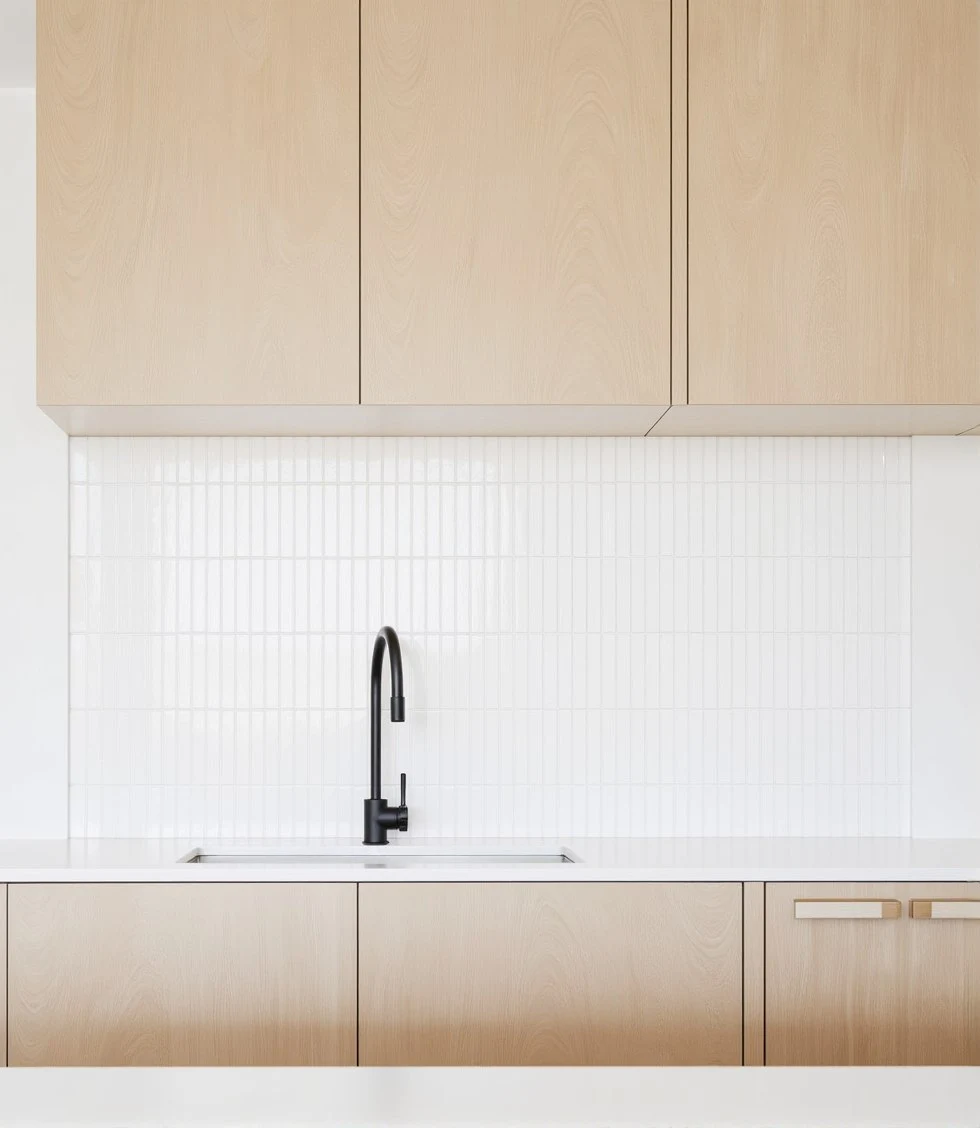
STACK BOND TILE PATTERN VS TRADITIONAL TILE STACKING PATTERNS IN MODERN KITCHEN
Let's be honest—stacked tile looks sharp. It's clean,modern,and all over design magazines. But here's the thing: that same precision is what makes a stacked pattern tile layout more expensive and harder to install. This guide breaks down what actually changes when you choose a stack tile pattern over traditional tile stacking patterns,using real-world cost data,industry standards,and practical advice you can use right away.
What Makes a Stack Bond Tile Pattern Different From Traditional Tile Stacking Patterns?
Short Answer: A stack bond pattern features tiles aligned in a perfect grid with straight,uninterrupted grout lines,unlike traditional staggered layouts.
A stack bond tile pattern lines tiles up in a perfect grid—no offsets,no staggering. Tiles sit directly above and beside each other. Traditional tile stacking patterns,on the other hand,shift each row to break up grout lines
and hide small imperfections.
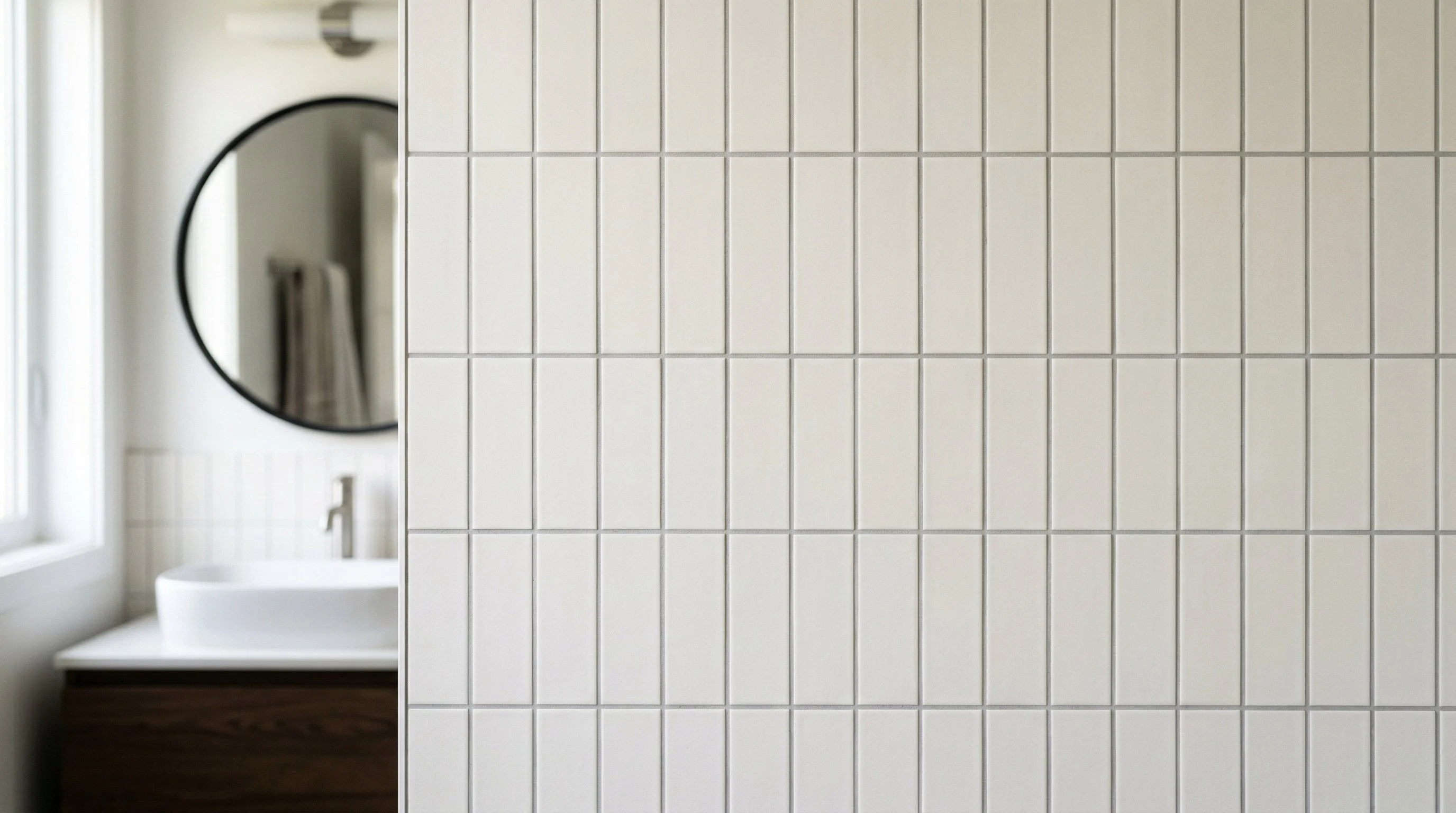
STACKED TILE PATTERN CLOSE UP SHOWING STRAIGHT GROUT LINES
That design choice changes how forgiving the installation is. With stacked tiles,every grout line becomes a visual ruler. If one tile is off,your eye catches it instantly. In traditional layouts,small mistakes blend into the pattern.
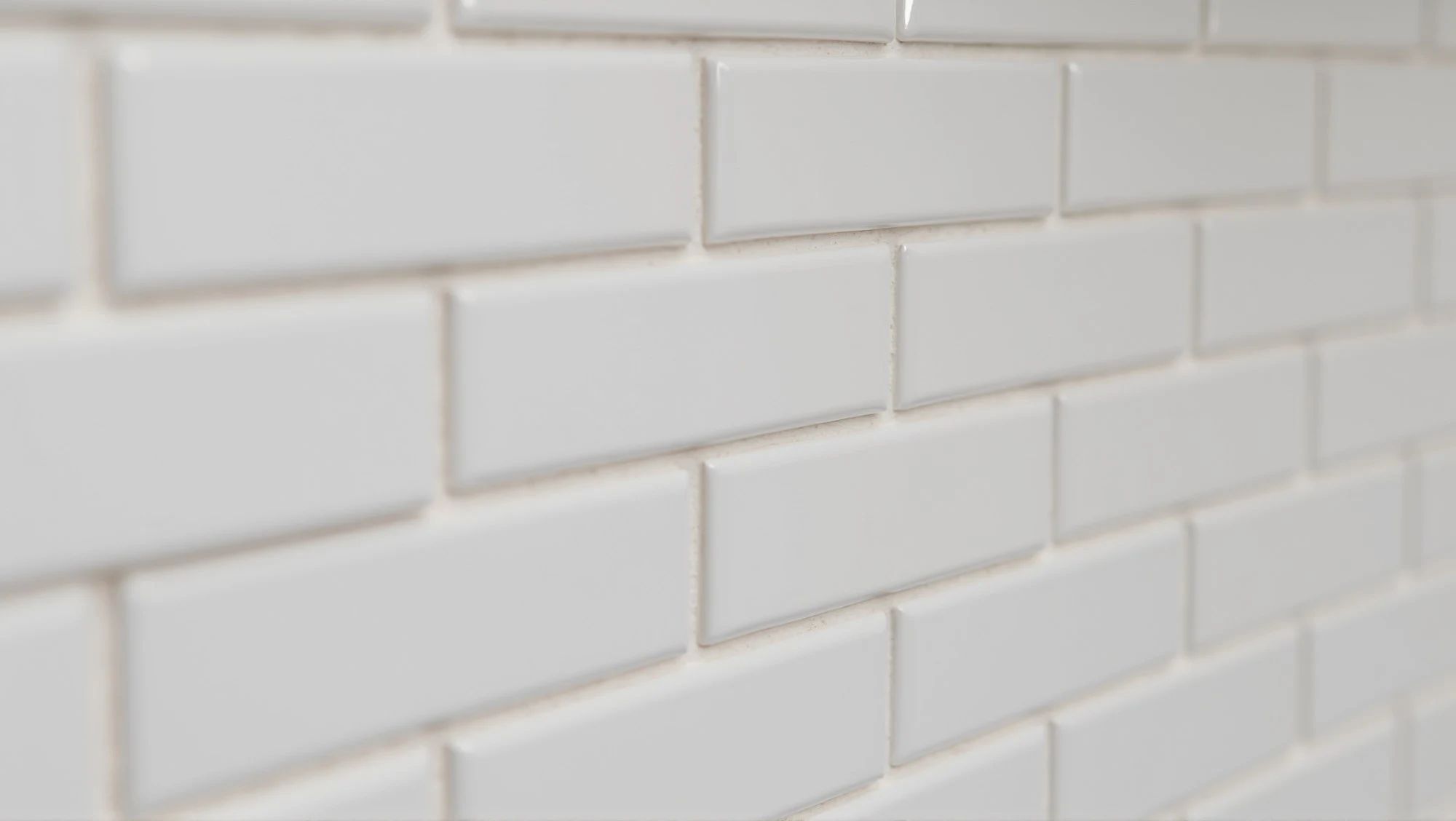 TRADITIONAL TILE STACKING PATTERNS BRICK BOND LAYOUT EXAMPLE
This is why stacked tile bathrooms and stack tile backsplash designs are usually specified for modern or minimalist interiors. The style is bold,but the tolerance for error is low. If your walls aren't flat or your tiles aren't consistent in size,the pattern will show every flaw. That's not a dealbreaker—but it's something you should know before committing.


How Do Stack Bond Tile Costs Compare With Offset and Staggered Tile Patterns?
Short Answer: Stack bond tiles are more expensive than offset or staggered patterns. Material costs are similar,but labor,alignment time,wall prep,and waste (10–15%) are higher. This puts stacked installation at the upper end of the U.S. cost range for a precise,modern finish.
Material costs don't change much between layouts. A porcelain tile costs what it costs. The price difference comes from labor time,waste,and prep work.
Cost Examples And Material Comparisons
| Item | Low Range | High Range |
|---|---|---|
| Tile Material (Per Sq Ft) | $1–$5 | $10–$30+ |
| Labor (Stacked) | $6–$12 | $15–$30+ |
| Labor (Brick) | $5–$10 | $12–$22 |
Data from flooringclarity
According to pricing ranges reported by HomeAdvisor,professional tile installation in the U.S. typically runs from about $10 to $25 per square foot,depending on complexity and location. Stack bond tile pattern installations usually land at the higher end of that range because:
More waste: Stacked pattern tile layouts often require tighter cuts and better tile consistency,which increases waste. It's common to see 10–15% extra tile ordered for stacked tiles,compared to around 5–10% for traditional tile stacking patterns.
More layout time: Installers spend more time dry-fitting and aligning rows. That's labor you're paying for.
More prep work: Walls and floors need to be flatter. If they aren't,extra leveling is required.
 COST COMPARISON CHART FOR STACK BOND TILE PATTERN
Here's a simple way to think about it: you're paying for precision. If your budget is tight,traditional tile stacking patterns usually offer better value. If your design goal is crisp and modern,stacked tiles may be worth the premium.
Is Vertical Stacked Tile Pattern Harder to Install Than Horizontal Stacked Tile Pattern?
Short Answer:Yes—most installers will tell you vertical stacked tile pattern layouts are tougher to get right than horizontal ones.
Vertical stacked backsplash designs pull the eye upward,which makes crooked grout lines more obvious. Soldier stack tile layouts (where tiles stand vertically) look striking,but they demand near-perfect alignment.
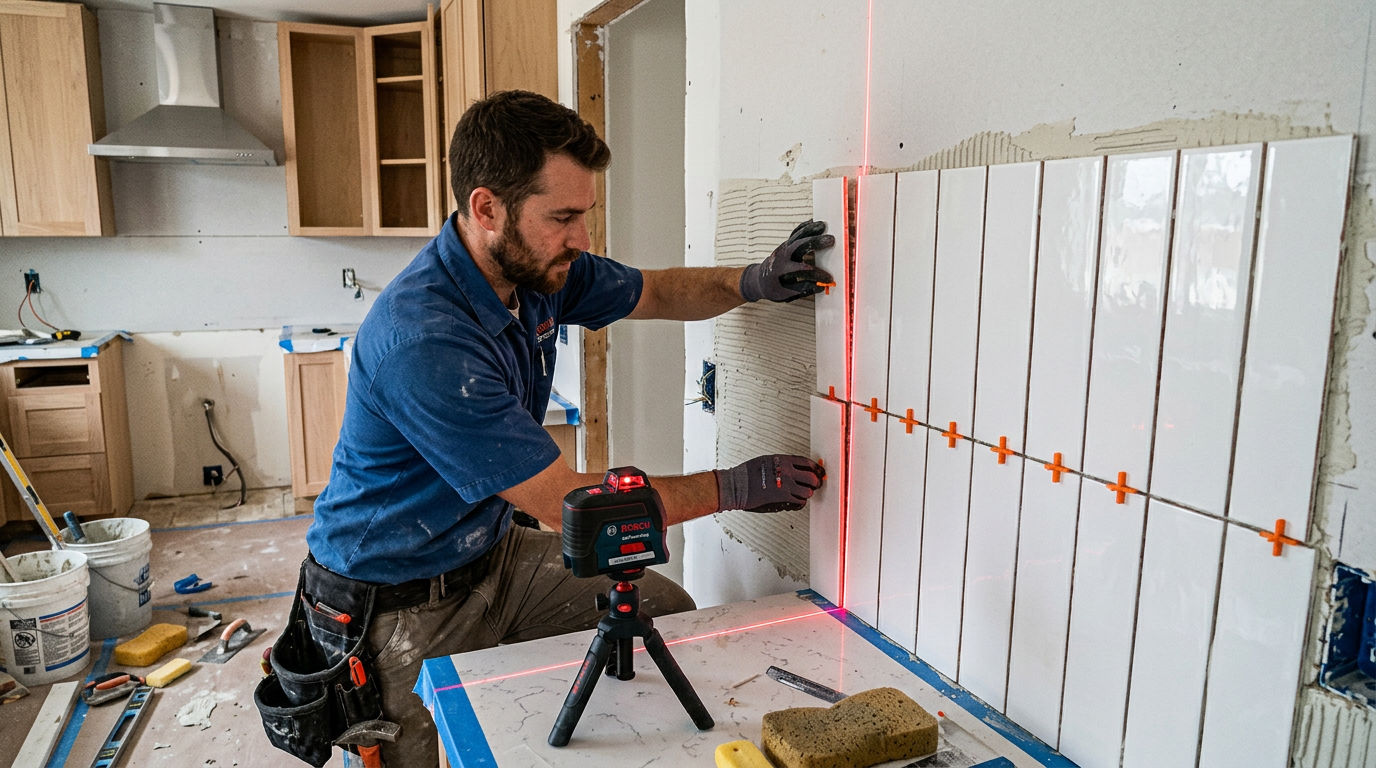 KITCHEN BACKSPLASH VERTICAL TILE INSTALLATION WITH LASER LEVEL
Industry standards published by Tile Council of North America explain that substrate flatness is critical for large-format tile installations. Stacked tile patterns effectively tighten those requirements because the straight grout lines highlight any unevenness. You can read the tileshops's general guidance on substrate preparation and tile installation standards here;
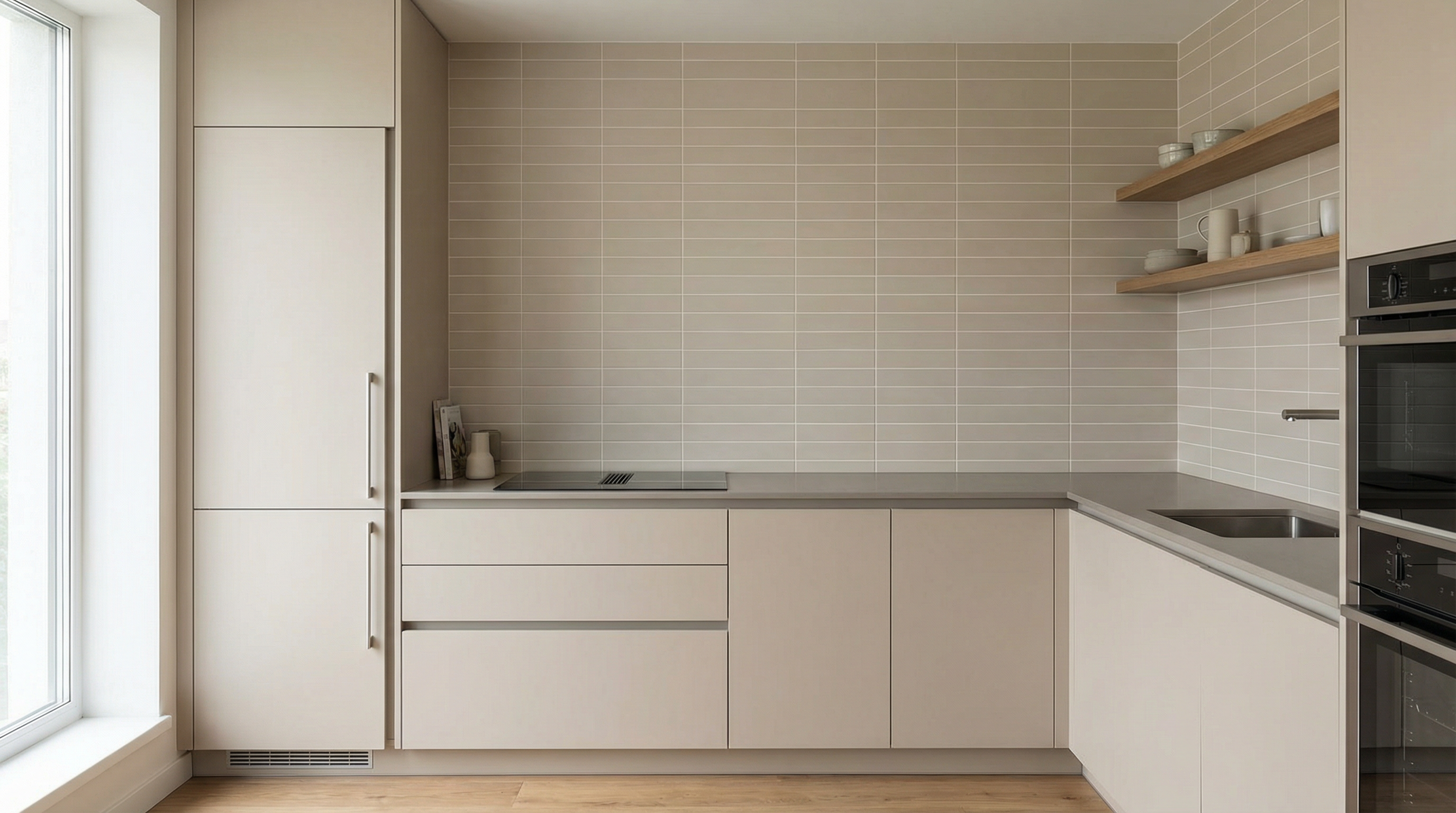 HORIZONTAL STACKED TILE PATTERN BACKSPLASH IN MINIMALIST KITCHEN
Horizontal stacked tile patterns are slightly more forgiving,especially on backsplashes,because small deviations don't jump out as much. Still,compared to traditional tile stacking patterns,both orientations take more skill and more setup time. It's not rocket science—but it's not plug-and-play either.
What Are the Hidden Costs of Stack Tile Installation?
Short Answer: The main hidden costs of stack tile installation include wall surface leveling,extra time for dry‑layout and alignment checks,and higher rework risk if grout lines are uneven. These often unquoted expenses can increase the total cost by 10–20%.
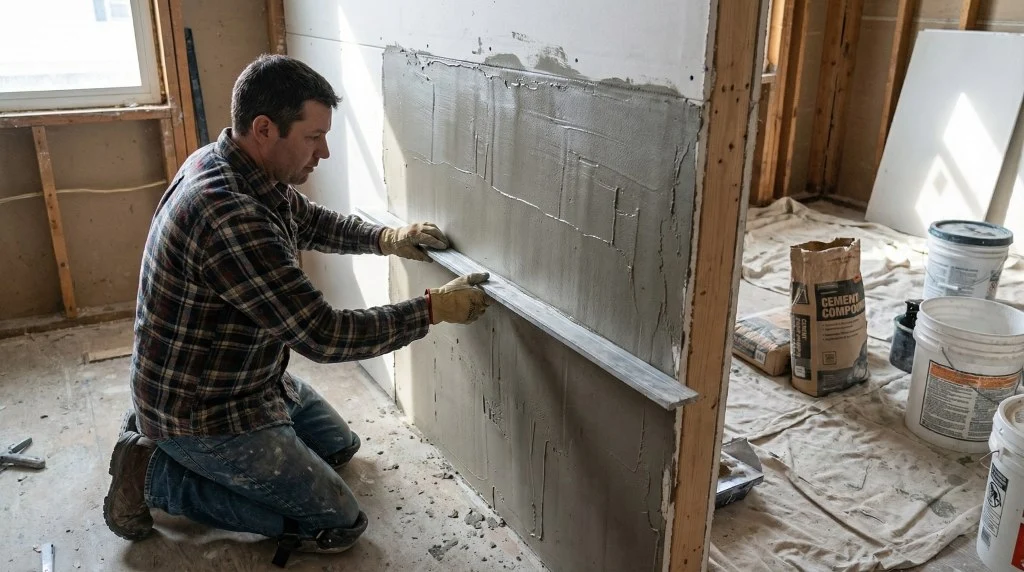
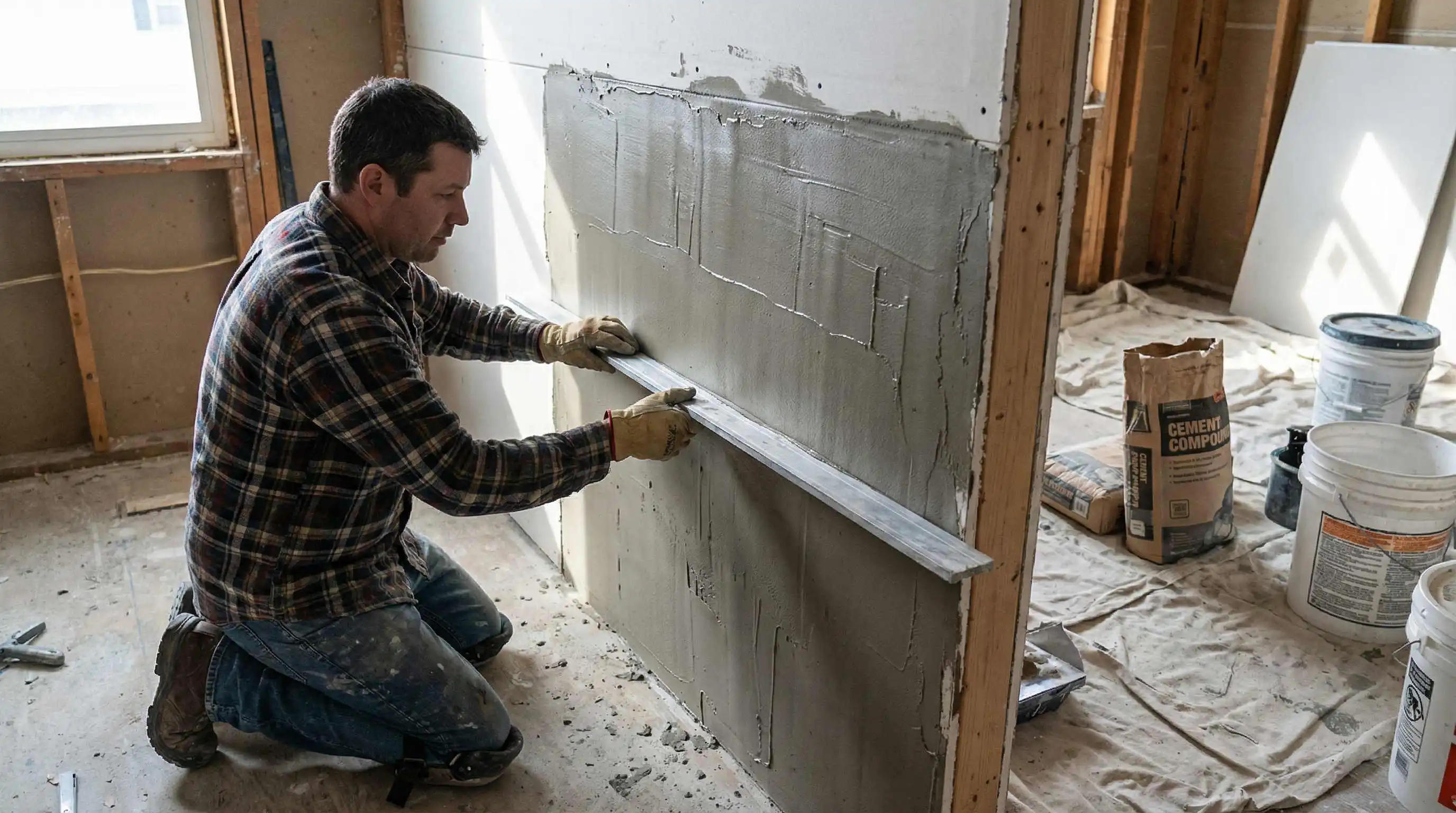 WALL SURFACE LEVELING BEFORE STACKED TILE INSTALLATION
Here's where budgets get tripped up. The initial quote often doesn't include:
Surface prep: Old drywall or uneven cement board may need leveling. According to installer guidance shared by National Tile Contractors Association,improper substrate preparation is one of the most common causes of tile failure. The NTCA emphasizes best practices for prep and installation here:
- Mockups and layout checks: Pros often dry-lay stacked tiles to confirm spacing and alignment. That takes time—and time costs money.
- Rework risk: If grout lines drift,fixing them can mean pulling and resetting multiple rows. Traditional tile stacking patterns are more forgiving if small adjustments are needed.
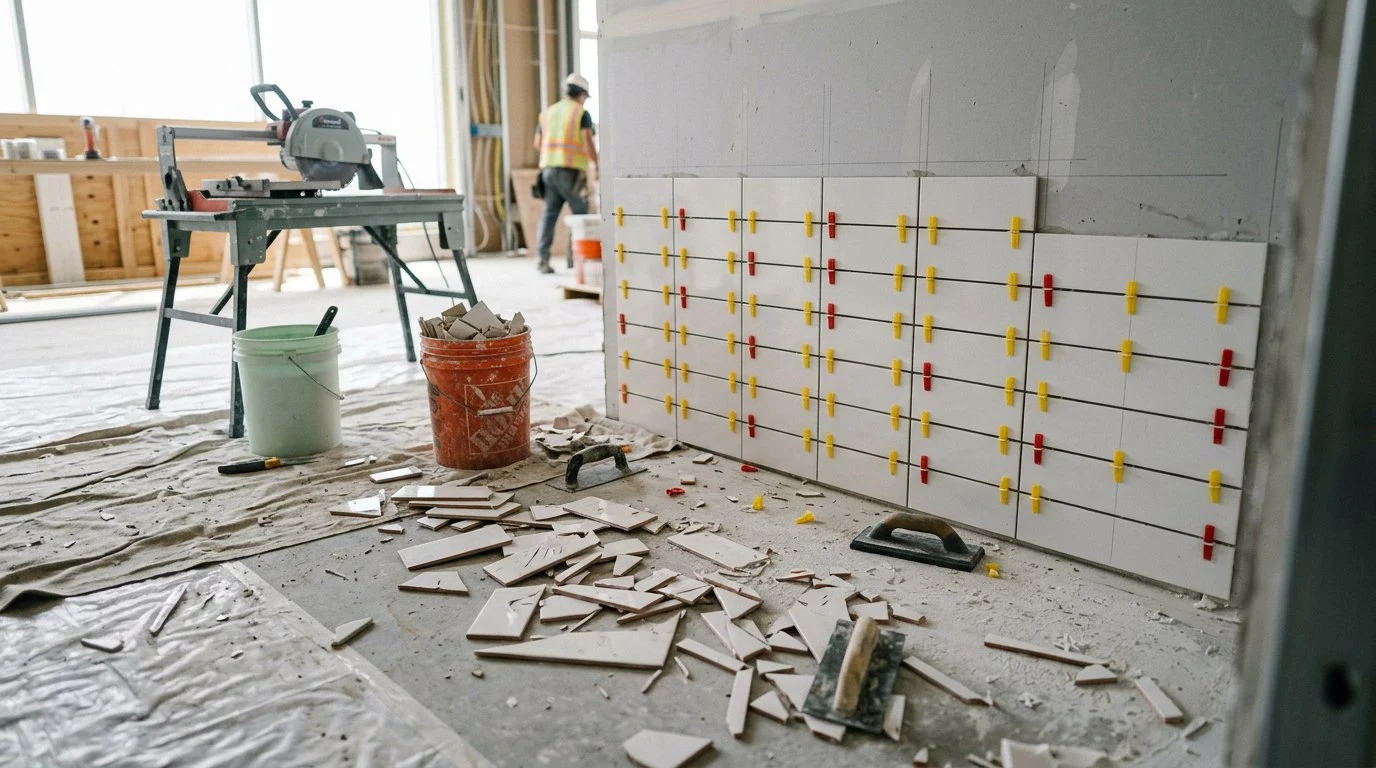
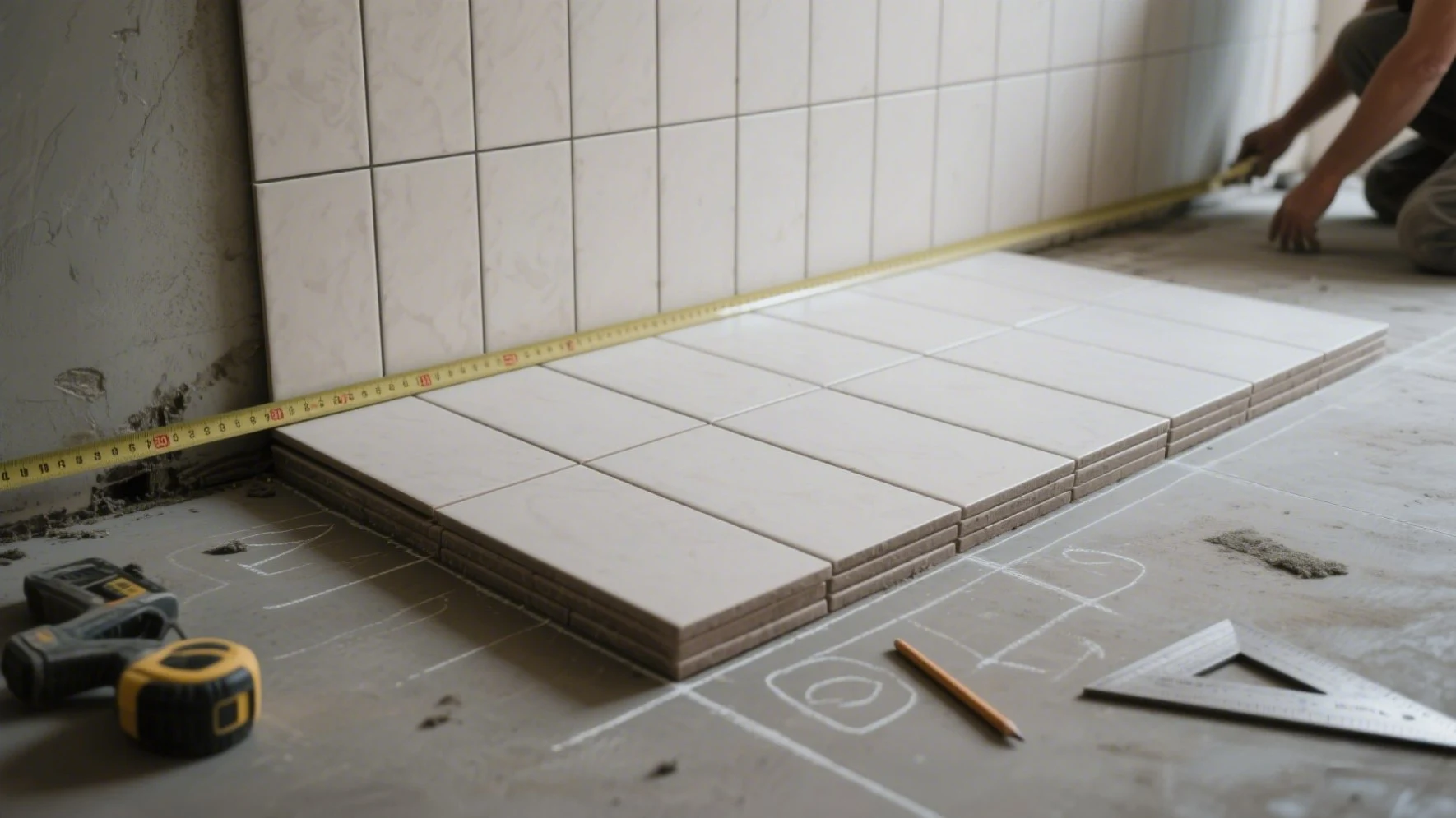 CONTRACTOR DRY LAYOUT PLANNING FOR STACK BOND TILE PATTERN
This is the "hidden cost" zone. Individually,these items don't look huge. Together,they can push your final bill up by 10–20%. It's not fun,but it's better than living with crooked lines for the next decade. Don't cut corners on prep—future-you will thank you.
When Does a Stack Bond Tile Pattern Make Financial Sense?
Short Answer: Stack bond is financially smart for small,high‑visibility modern spaces and can boost home appeal. It's not ideal for large floors,tight budgets,or basic rentals.
A stack bond tile pattern tends to make the most sense when:
The area is small but visible: A stack tile backsplash or feature wall in a stacked tile bathroom can deliver big visual impact without covering hundreds of square feet.
The design style is modern or minimalist: Clean lines support the overall look.
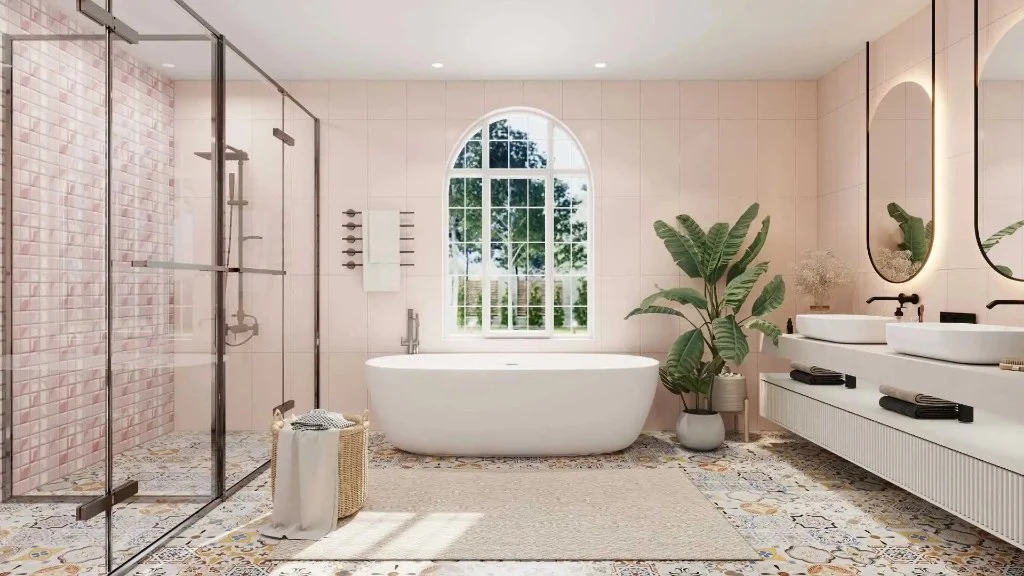
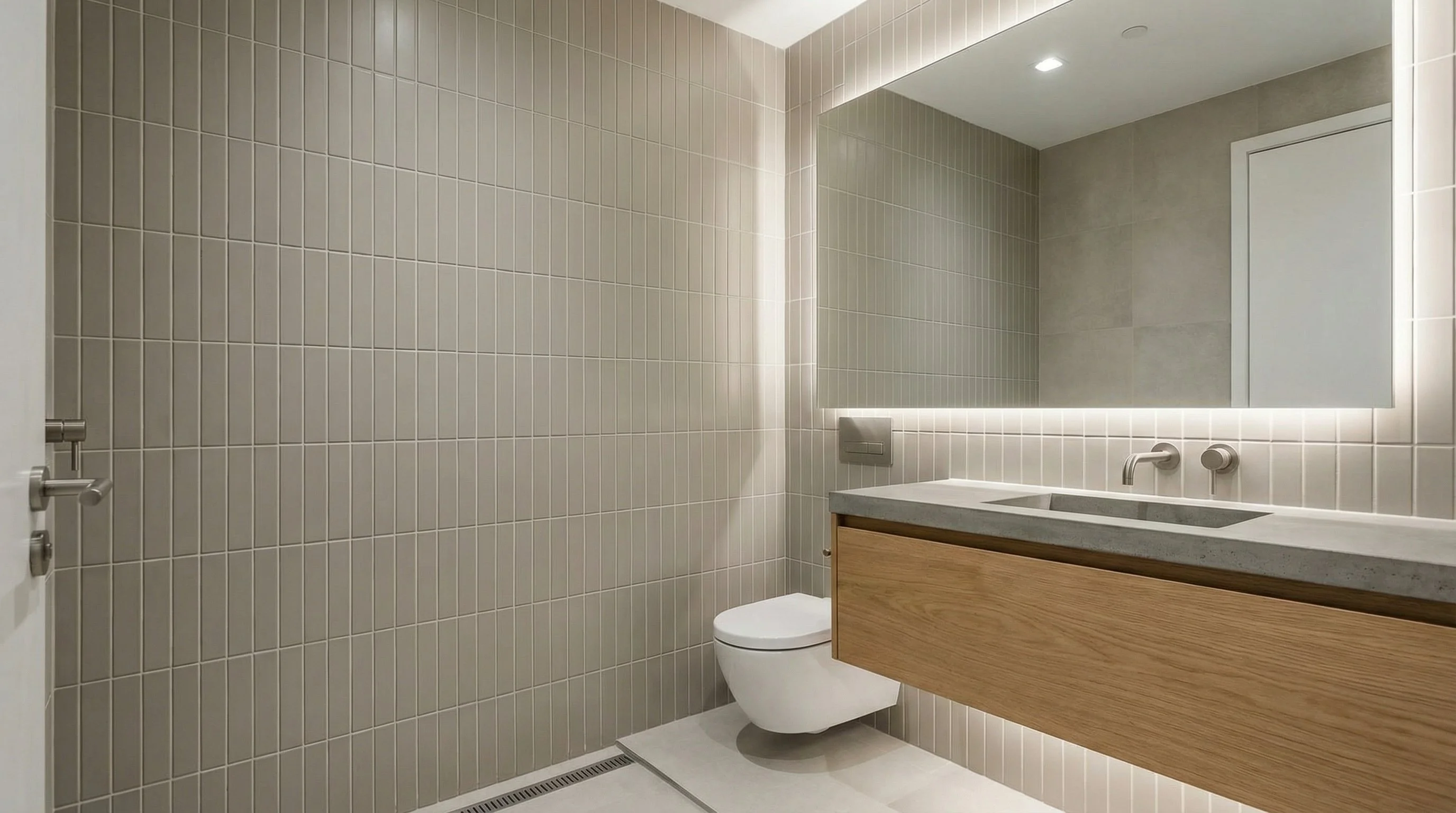 STACKED TILE BATHROOM FEATURE WALL IN SMALL MODERN BATHROOM
You care about buyer perception: Updated kitchens and bathrooms consistently influence how buyers view a home. While resale value depends on many factors,polished finishes often help properties show better.
When does it not make sense?
Large stacked tile floor projects on uneven substrates,rental properties with tight budgets,or DIY projects without professional-grade tools. Traditional tile stacking patterns are more forgiving,cheaper to install,and easier to repair later. Sometimes playing it safe is the smart move—and that's okay.
Which Tile Stacking Pattern Performs Better Over Time?
Short Answer: Traditional offset patterns hide movement and cracks better over time. However,installation quality,waterproofing,and surface prep matter far more than the pattern itself.
Performance depends more on installation quality than on the pattern itself,but patterns do change how stress shows up over time.
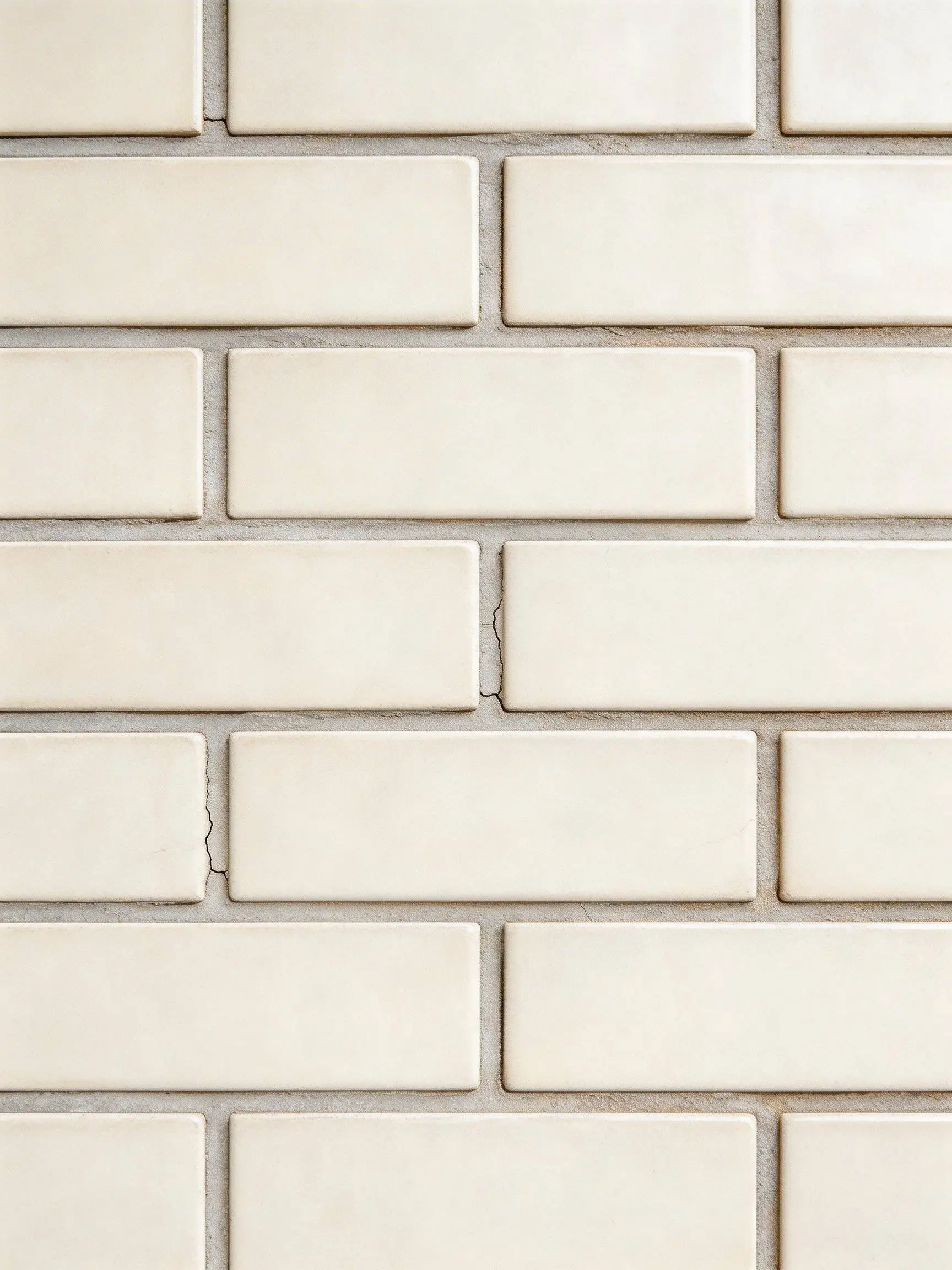
Traditional tile stacking patterns spread movement across offset joints,which can reduce visible cracking if a substrate shifts slightly. Stack bond tile patterns line joints up in straight runs,so any movement may show along grout lines. That doesn't mean stacked tiles fail more often—but when they do fail,the damage is easier to see.
 |
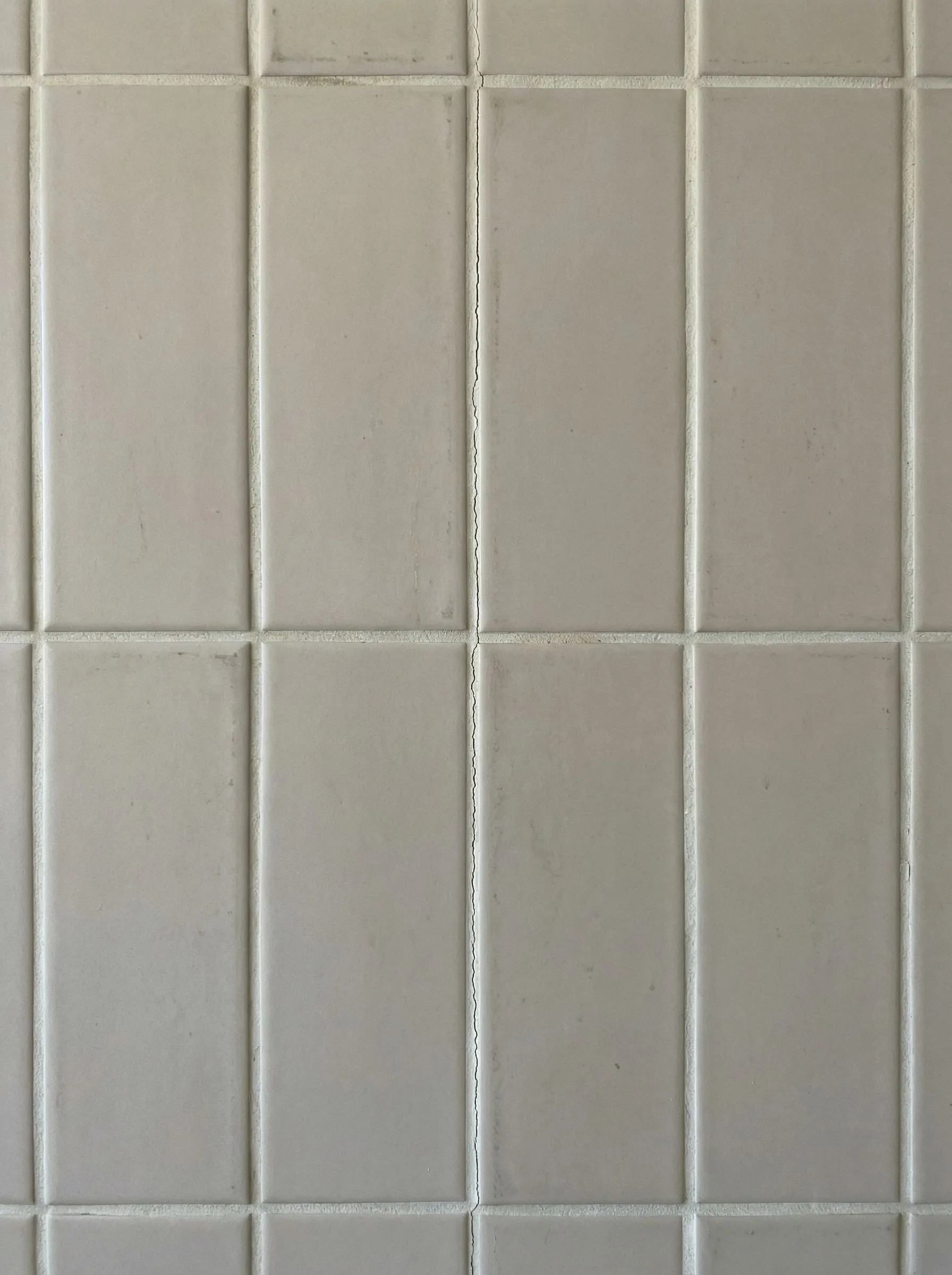 |
CRACKED GROUT LINES COMPARISON STACKED TILE VS OFFSET TILE PATTERN
In wet areas like stacked tile bathrooms,waterproofing matters more than the layout. The Digsdigs's guidelines on waterproofing and substrate prep are a solid reference point for long-term performance:
Bottom line: good prep,proper waterproofing,and experienced installation matter more than whether you choose stacked tiles or traditional tile stacking patterns.
So,Are Stack Bond Tile Patterns Really Worth the Extra Cost and Effort?
Let's be real. If you love the look of stacked tiles,traditional tile stacking patterns won't give you the same vibe. The clean lines and modern feel of a stack bond tile pattern are hard to fake. But you pay for that look in higher labor costs,stricter prep requirements,and less room for error.
If your budget is tight,your walls aren't perfectly flat,or your installer isn't experienced with stacked pattern tile layouts,traditional patterns are the safer choice. If you're working with a skilled pro and want a contemporary finish,stacked tiles can absolutely be worth it. Don't overthink it—match the pattern to your space,your budget,and your risk tolerance. That's how you win this decision.