Compact bathrooms can feel cramped, but with the right design strategies they can appear brighter and more spacious — and be far more comfortable to use. The key is to approach layout, tile, lighting, storage, and fixtures as a unified system. Treat every decision as part of a coherent plan to avoid a fragmented, piecemeal result. When function and aesthetics are balanced, even a small bathroom can deliver a spa-like sense of relaxation.
We will share space-saving ideas commonly used by interior designers. These suggestions blend practicality with style to free up valuable floor area, reduce visual clutter, and elevate the room’s overall finish. You’ll also find complementary recommendations for compact bathroom layouts, storage solutions, tile choices, lighting schemes, and shower options. Follow these principles and you’ll end up with a coordinated design strategy — not just a few isolated upgrades.
1. Start With a Smart Layout for Best Flow and Comfort
Great design choices for a smaller bathroom begin with layout, because a few inches can determine whether the room feels open or cramped. Before choosing finishes, confirm the basics: door swing, walking path, and fixture spacing.
Layout ideas to consider for limited space:
-
One-wall layout: sink, toilet, and shower/tub aligned on one wall for the simplest plumbing plan.
-
Galley layout: fixtures on both sides with a clear center path, ideal for narrow bathrooms.
-
Three-quarter bath: shower, toilet, and vanity without a tub, often the best choice for tight square footage.
-
Wet room approach: a fully waterproofed bathroom where the shower area is integrated, reducing visual barriers.
Design tip: In a small room, “visual calm” matters as much as physical space. Fewer breaks in materials and cleaner lines instantly make the room feel larger.
2. Choose the Best Shower Setup for a Compact Bath
Shower selection can dramatically change how spacious a tiny bathroom feels. If you’re searching for shower ideas for a smaller space, prioritize solutions that reduce bulky frames and keep sight lines open.
Best shower options for tight layouts:
-
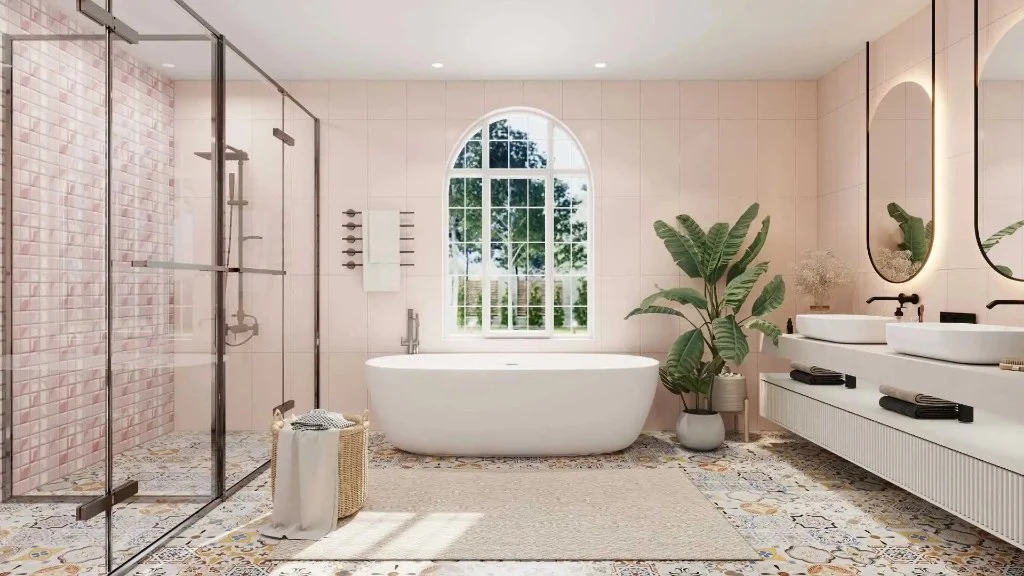
Walk-in shower with clear glass: visually expands the room and feels modern.
-
Corner shower enclosure: maximizes unused corners, great for square layouts.
-
Curbless shower: creates one continuous floor plane, making the bathroom feel more spacious.
-
Shower-tub combo with a glass screen: more streamlined than a curtain and easier to clean.
If space is extremely tight, consider a slim linear drain and a simple frameless glass shower panel. This supports a cleaner, more “architectural” look—one of the most effective modern design moves for a tiny bathroom.
3. Use Wall-Mounted Fixtures to Open Up Floor Space
Wall-mounted elements are a designer favorite because they expose more floor area, which instantly improves spaciousness. They also make cleaning easier.
Wall-mounted upgrades that work well:
-
Floating vanity to reveal the floor underneath
-
Wall-hung toilet with an in-wall tank to reduce depth
-
Wall-mounted faucet to free up vanity surface area
This is one of the most reliable remodel ideas for a compact bathroom because it improves both function and visual lightness without needing a larger footprint.
4. Select a Space-Saving Vanity That Still Feels Stylish
The vanity is often the visual anchor of a bathroom, so it needs to balance size with storage. For vanity ideas in a guest bathroom or a small primary bath, look for compact silhouettes that don’t sacrifice daily usability.
Vanity ideas for a limited footprint:
-
Narrow-depth vanities that preserve walking space
-
Corner vanities for tight layouts
-
Floating vanities with drawers for better organization
-
Integrated sink tops to reduce seams and simplify cleaning
If you want the bath to look less cluttered, prioritize drawers over cabinets. Drawers keep essentials organized, which supports cleaner countertops—an underrated win when designing a small bathroom.
5. Build a Light-Boosting Color Scheme for a Larger Visual Effect
Color has a major impact on perceived space. Many of the most effective paint ideas for a compact bath use light-reflecting tones to brighten the space and lift ceilings visually.
Color strategies that work:
-
Light neutrals: warm white, beige, greige, and soft gray
-
Tone-on-tone palettes: same family for walls, tile, and vanity to reduce contrast breaks
-
Soft accent colors: muted sage, dusty blue, or blush for warmth without shrinking the space
You can still use dark colors in a small bath—but use them intentionally, such as on a vanity, a single feature wall, or in matte finishes paired with excellent lighting.
6. Use Tile Design to Make a Compact Bath Look Bigger
Tiles can visually “stretch” a room when used correctly. If you’re researching tile ideas for a small bathroom, think beyond the tile type and focus on layout, grout lines, and continuity.
Tile ideas for a compact footprint that expand visual space:
-
Large-format wall tiles to reduce grout lines and create a smoother look
-
Vertical tile stacking to make ceilings feel taller
-
Horizontal tile layouts to make narrow bathrooms feel wider
-
Matching floor and shower floor tones to keep the room feeling continuous
For shower floors, smaller tiles are often practical for slope and drainage. Choose slip-resistant finishes and grout colors that don’t show stains easily.
Designer detail: Use grout that’s close to the tile color for a “seamless” look—one of the simplest optical tricks for making a smaller bathroom feel open.
7. Layer Your Lighting for Function and Ambience
Lighting can make or break a compact space. The best lighting plan for a small bathroom combines three layers: ambient, task, and accent.
A strong lighting plan includes:
-
Ambient lighting: recessed ceiling lights or a flush-mount fixture
-
Task lighting: vertical sconces or backlit mirrors at the vanity
-
Accent lighting: niche lighting in the shower or under-vanity glow
Aim for lighting that makes skin tones look natural at the mirror. A balanced lighting temperature helps the entire bathroom feel cleaner and more premium.
8. Use Mirrors Strategically to Expand the Space Visually
Mirrors are one of the most cost-effective ways to create visual space, because they reflect light and visually double depth.
Mirror strategies designers use:
-
Oversized mirror above the vanity to widen the room
-
Mirror cabinets to combine reflection and storage
-
Backlit mirrors to improve task lighting and add modern style
Oversized wall-to-wall mirror above a vanity in a windowless powder room
If your bathroom lacks natural light, mirrors become even more important. Pair them with glossy or satin finishes to bounce light further.
9. Add Storage Without Visual Clutter
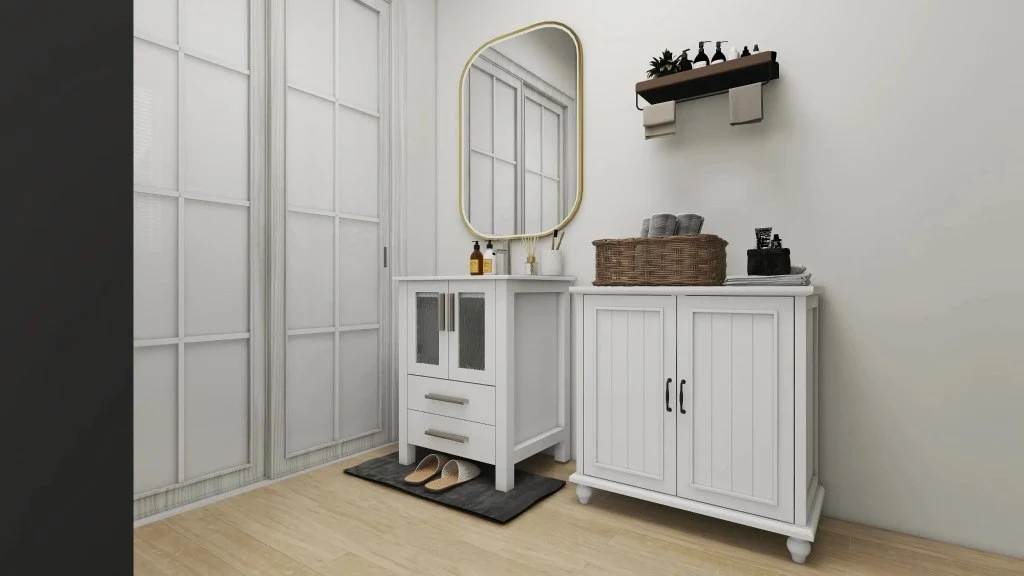
Storage is essential, but bulky cabinets can make a small space feel crowded. The best storage solutions for a compact bathroom hide necessities while keeping lines clean.
Space-smart storage solutions:
-
Recessed shower niche instead of hanging caddies
-
Recessed medicine cabinet for shallow-wall storage
-
Vertical shelving above the toilet
-
Slim tower cabinet in unused corners
Keep open shelving minimal and styled. Too many visible items create visual noise, which makes the space feel smaller than it is.
10. Upgrade Doors and Entries to Save Space
Door clearance can steal precious inches. One of the most overlooked space-saving moves is improving the entry.
Space-saving door options:
-
Pocket door that slides into the wall
-
Sliding barn-style door when pocket installation isn’t possible
-
Out-swing door to free interior space
Even changing hardware and door thickness can improve usability in a tight layout.
11. Improve Ventilation and Moisture Control for a Fresher Bathroom
Tiny bathrooms trap humidity quickly, leading to foggy mirrors, peeling paint, and mildew. Strong ventilation protects finishes and keeps the space feeling crisp.
Moisture control essentials:
-
Use a properly sized exhaust fan and vent it outdoors
-
Choose mold-resistant paint and moisture-friendly materials
-
Select low-porosity tile and easy-clean grout in wet zones
Good ventilation is a “quiet luxury” feature: it improves comfort, extends material lifespan, and supports healthier indoor air.
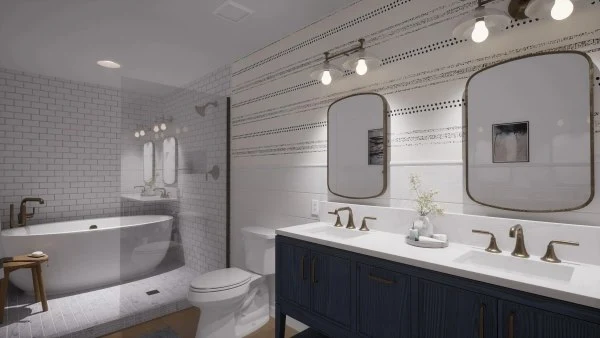

12. Try Budget-Friendly Design Ideas for a Compact Bath With High Impact
Not every upgrade needs a full bathroom renovation. These budget-friendly ideas for a tiny bathroom can refresh the space quickly:
-
Replace the mirror with a larger or backlit version
-
Upgrade faucets and shower fixtures for a modern finish
-
Repaint in a lighter tone to boost brightness
-
Swap old lights for brighter, better-placed fixtures
-
Add a niche, shelves, or a recessed cabinet for practical storage
A few targeted changes often deliver the biggest improvement-per-cost, especially in compact rooms.
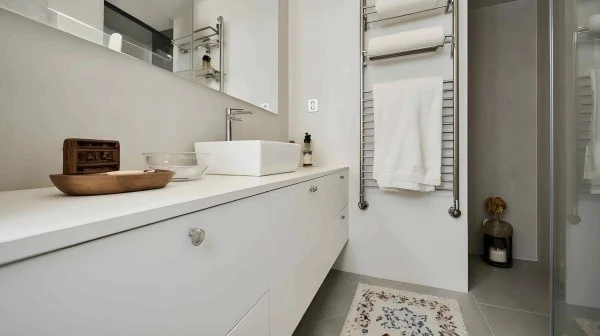
13. Add Luxury Details That Elevate a Compact Bath
Luxury in small bathrooms isn’t about size—it’s about restraint, quality, and detail. These upscale design ideas for a smaller bathroom add a boutique-hotel feel:
-
Frameless glass shower panel for a clean, open look
-
Wall-mounted vanity with stone-look top for an upscale finish
-
Statement tile feature wall behind the vanity or in the shower
-
Heated towel rail for comfort and daily convenience
-
Minimalist hardware in cohesive finishes like matte black, brushed nickel, or warm brass
Keeping finishes consistent is one of the fastest ways to make a compact bath look expensive.
14. Avoid Common Design Mistakes in a Compact Bath
Even good materials can fail if the decisions don’t match the space. Avoid these frequent issues:
-
Choosing oversized fixtures that block movement
-
Using too many contrasting materials, creating visual clutter
-
Prioritizing style over slip resistance in wet zones
-
Ignoring storage, leading to messy countertops
-
Under-lighting the vanity and shower area
-
Poor ventilation that causes mold and finish damage
The best design choices for a tight space are the ones that look great and make daily use easier.
Conclusion
The most successful design ideas for a compact bath combine smart planning with visual simplicity. Start with layout, then open up the space using wall-mounted fixtures, space-smart storage, and clear shower solutions. Finally, use light colors, thoughtful tile design, and layered lighting to create a bathroom that feels bigger, brighter, and more enjoyable every day.
FAQ: Design Ideas for Compact Bathrooms
1. How can color choices improve a small bathroom design without making it feel bland?
Light warm neutrals expand visual space by up to 15%, making a limited space feel airy. A white bathroom stays interesting when you layer soft beige walls with warm gray tiles. Add depth with a muted sage accent wall. This design choice uses glossy finishes to reflect light and open up the space, avoiding a flat look while letting the feel in a small bathroom remain calm and open.
2. What lighting strategies work best for an effective small bathroom design?
Layer ambient, task, and accent light to open the space in a small room. Recessed 2700K LEDs wash walls and enlarge visual space. Vertical sconces at eye level eliminate shadows, and under-vanity LED strips add depth, making every inch of precious space count. Dimmers let you switch moods, helping make your small bathroom feel brighter and more expansive without clutter.
3. Which tile sizes, finishes, and layouts are smartest for a compact small bathroom design?
Use large-format tiles with minimal grout lines to reduce visual breaks and expand a smaller space. White subway tiles laid vertically lift the ceiling. In a small walk-in shower, a frameless glass shower maintains open space, unlike a glass door that fragments the room. Match grout to tile for a minimalist design, and place a shower head niche to maximize limited space.
4. How can storage, fixtures, and layout decisions optimize a functional small bathroom design?
Wall-mounted fixtures are the best design choice for low storage space. A floating vanity and wall-hung toilet free precious space, creating a more usable space. A cabinet above the toilet captures vertical wall space, while recessed niches keep the shower and sink zone clear. A compact toilet paper holder mounted on the vanity side saves inches. These moves use the space fully and turn your small bathroom into a clutter‑free, open retreat.